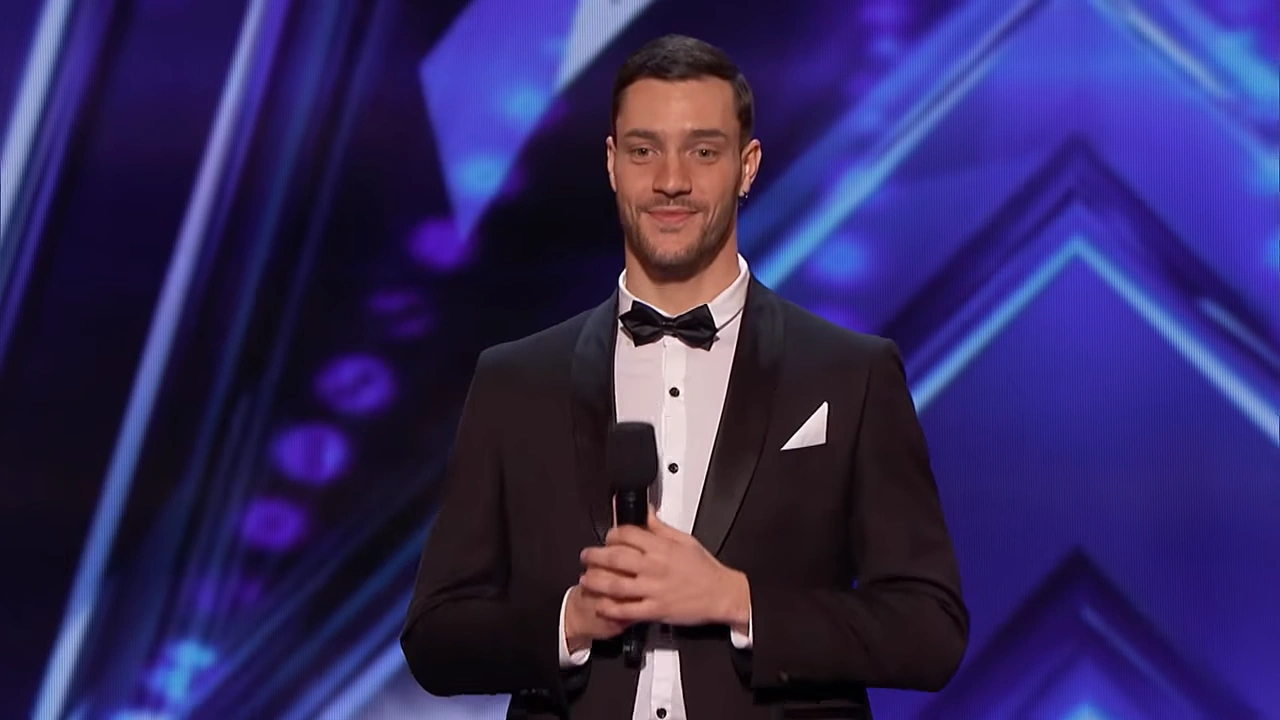
Patricio Ratto, a young classical pianist from Italy, walked onto the stage with the kind of quiet confidence that comes from years of practice rather than bravado. He began by sharing a bit of his personal history — that he had been a shy child who found refuge in the piano. The instrument, he said, became a friend, a place where he could speak when words failed him. That confession landed simply and sincerely; you could tell it wasn’t a rehearsed sob story but the honest foundation of his relationship with music. From the way he described his early lessons and the evenings spent hunched over the keys, it was clear the piano had been more than a pastime — it had been a way to understand himself.
When he took his seat at the grand piano, the theater seemed to lean in. He chose a piece by Beethoven, a composer he called “everything for me,” and that declaration colored the entire performance. Beethoven’s music is often associated with intellect and intensity, and Patricio approached the score with both technical precision and palpable reverence. Each measure was executed with care, but there was also a warmth to his phrasing that suggested he wasn’t simply reproducing notes — he was conversing with the composer across centuries. Small details mattered: the way he subtly shaped a phrase, the slight lift of a wrist before a dramatic chord, the softening of tone in a reflective passage. Those touches revealed not only skill but a deep emotional investment in the music.
Midway through the piece, however, something unexpected happened. Where an audience might have anticipated a straightforward classical recital, Patricio shifted gears in a way that took everyone by surprise. The music — already charged with energy — seemed to awaken another side of him, and he rose from the bench to incorporate fierce, almost raw dance movements into the act. It wasn’t a delicate gesture or a staged flourish; it was a full-bodied eruption of motion that transformed the performance. Suddenly the stage was alive with both the sonic force of Beethoven and the physical expression of a young artist unbound.
The dance itself carried a dramatic intensity. Patricio moved with the force of someone who had held emotions inside for a long time and finally needed to release them. His steps were bold and angular at times, then fluid and sweeping at others, mirroring the ebb and flow of the music. There were moments when his footwork punctuated a powerful chord, and other moments when his torso seemed to arc with the melody, as if he and the piano were engaged in a conversation of sound and body. The contrast between the discipline of classical piano and the raw energy of his movement created a compelling tension that had the audience riveted.
Part of what made the moment so striking was its authenticity. Patricio didn’t dance as a gimmick; his movement felt like a natural extension of his musical interpretation. You could imagine a quieter, more restrained version of the act playing out in a conservatory recital hall, but what he chose instead was to bring his whole self to the stage — the shy child who found solace in music and the passionate young artist who now demanded to be seen. That fusion of modesty and boldness made the performance deeply human. It was a reminder that artistry doesn’t have to fit into narrow categories; it can bridge disciplines and, in doing so, reveal unexpected facets of the performer.
The judges’ reactions captured the collective surprise. Their initial puzzled expressions quickly melted into admiration as the performance escalated. You could see the shift on their faces: curiosity turning to appreciation, then to amazement. The audience, too, reacted in waves — first silence as people tried to take in the unusual combination, then an eruption of applause that felt celebratory rather than merely polite. It was the kind of reaction that happens when a performer risks something genuine and it pays off.
Beyond the theatrical shock value, the performance felt like a celebration of the transformative power of music. Patricio’s story about growing out of shyness and into expressive freedom gave the audition emotional weight. It wasn’t merely a display of technical prowess or a flashy dance routine; it was evidence of personal growth. The piano had been his language for years, and now his body was joining the dialogue. That union suggested a young artist who understands that music is not only heard but felt, and that expression can take many forms.
In the aftermath, people spoke not just about the novelty of a pianist who dances, but about the courage it takes to present one’s whole self onstage. Patricio’s audition stood out because it was unabashedly his: a sincere love letter to Beethoven, a chronicle of personal transformation, and an exuberant demonstration of what happens when discipline meets imagination. Watching him, you were left with the sense that music had done more than teach him notes and technique — it had taught him how to inhabit the world more fully. The performance was, in short, unforgettable: a moving testament to how passion can unlock parts of us we didn’t know could be seen.