
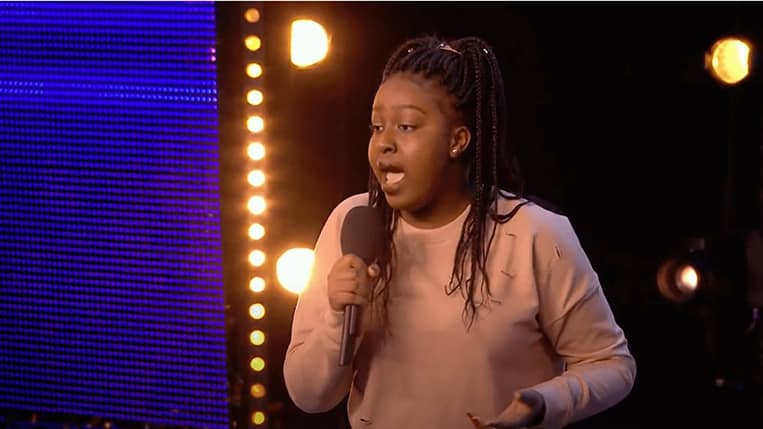
When 15-year-old Sarah Ikumu walked onto the Britain’s Got Talent stage, she looked every bit like a nervous teenager: sneakers, a simple dress, and the kind of tentative smile that betrays excitement and fear all at once. There was nothing about her appearance to telegraph the seismic vocal performance she was about to deliver. Still, the moment she introduced herself and announced her choice — “And I Am Telling You I’m Not Going,” a powerhouse number made famous in musical theater — you could feel a shift in the room. It was a bold pick for anyone, let alone a young singer whose vocal cords are still developing. Some in the audience exchanged surprised looks, and the judges’ faces held a mix of curiosity and polite skepticism. The song is a test of endurance, emotion, and control; attempting it on a live TV stage is audacious.
As the opening piano chords filled the auditorium, Sarah took a breath that was at once small and decisive. That inhale seemed to center her. When she began to sing, whatever nerves she carried melted away. Her voice arrived with a focus and clarity that immediately erased doubts. The tone was rich and warm, with a remarkable fullness that suggested an artist far beyond her years. She navigated the song’s wide intervals and dramatic shifts without a single audible stumble — a feat that can humble even seasoned performers.
What made the performance extraordinary wasn’t just technical skill, though there was plenty of that. Sarah infused each phrase with interpretive detail, as if she were inhabiting the character’s pain and resolve rather than merely reciting notes. There were moments of hushed intimacy where she let the vulnerability in the lyrics breathe, followed by surging, chest-driven belts that made the theater vibrate. Those contrasts — the tender and the thunderous — are the heart of the song, and Sarah managed them with the kind of dynamic control that few adults possess, let alone a teenager.
Small gestures amplified the emotional stakes. She closed her eyes during certain lines, as if recalling a private memory; she reached out with an open hand at one climactic point, though not in a theatrical, overblown way — more as a human plea. Her facial expressions tracked the narrative of the song: hurt giving way to defiance, then to pleading, and finally to a kind of exhausted triumph. Those animated, truthful details made the performance feel immediate and honest rather than showy.
The judges’ reactions were telling. Where there had been guarded curiosity at the start, shock and admiration replaced it as the audition unfolded. You could see the transformation on their faces — mouths parting, eyes widening, heads tilting in concentration. By the time Sarah reached the song’s emotional peak, even the generally stoic Simon Cowell was visibly moved. The audience, which had been politely attentive, erupted into spontaneous, sustained applause that nearly drowned out the final notes. It was the sort of response reserved for moments when talent aligns with heart in a way that feels unavoidable.
After she finished, there was a hush that felt like the room holding its breath before erupting. Then the ovation swept through the theater: standing, loud, genuine. One judge remarked that she hadn’t merely sung the song; she’d made it her own, a rare compliment implying both technical mastery and a distinct artistic identity. That observation is telling; covers can sound like covers, but when an artist reimagines a familiar piece and makes it feel new, it speaks to interpretation rather than imitation.
The audition reached its climax when Simon Cowell hit the Golden Buzzer. For a judge known for blunt assessments, the moment carried extra weight. Pressing the buzzer sent Sarah directly through to the live shows — an extraordinary endorsement that acknowledged the scale of what she had just accomplished. Simon’s decision felt in part symbolic: a recognition that the show had witnessed something beyond a strong audition, something potentially career-defining.
Backstage afterwards, you could imagine the flood of emotions — disbelief, elation, relief, and an almost childlike joy at having taken a risk and seen it pay off. For viewers at home and the people in that theater, the audition functioned as a vivid reminder that age alone is no measure of artistic maturity. A fifteen-year-old with the courage to tackle a notoriously difficult song, and the talent to do it convincingly, challenged assumptions about who can carry big emotional material.
Sarah’s performance was more than a television moment; it was a lesson in artistic bravery. Choosing such a demanding song signaled ambition, and executing it with conviction signaled preparation and inner strength. For aspiring singers watching, the audition offered a model: take risks, commit fully, and tell the truth in every phrase. For the rest of the audience, it was simply an unforgettable showstopper — a young artist staking her claim and, in the process, reminding everyone that true talent can arrive suddenly and unmistakably.