
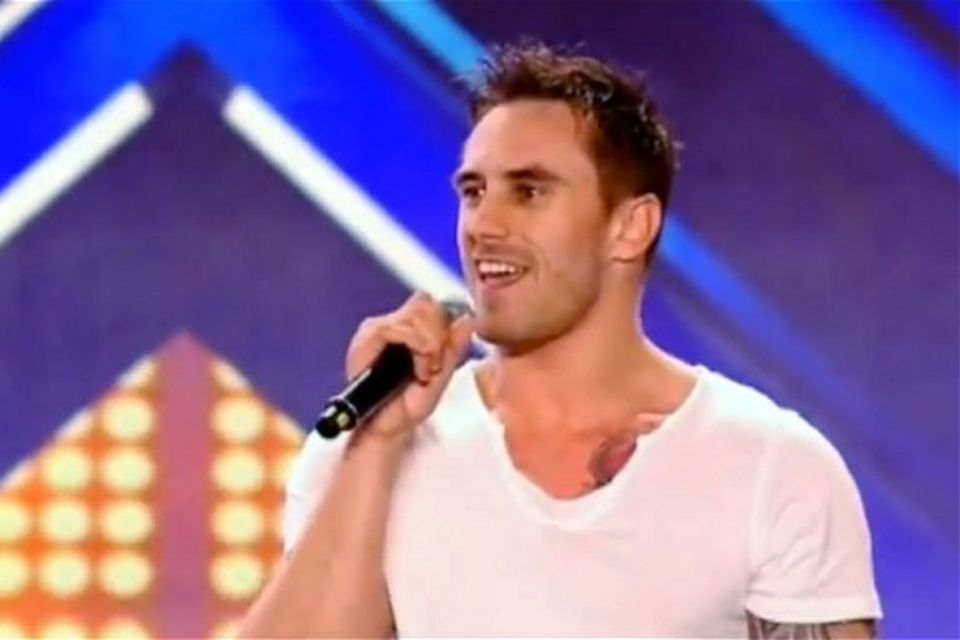
Joseph Whelan, a 26-year-old tool salesman from Wolverhampton, stepped onto the X Factor UK stage with an unassuming air that made him seem at home in any local pub or Saturday morning market. He introduced himself plainly and then spoke about the real reason he’d come: his four-year-old son, Kian. For a decade Joseph had chased the dream of making it in music — playing local gigs, recording demos in makeshift home studios, and balancing odd jobs to keep the bills paid — but fatherhood sharpened his focus. He talked about wanting to give his son something to be proud of, and that simple, vulnerable motivation hooked the audience. People don’t just root for talent on a show like this; they root for stories of sacrifice, for the person who shows up despite the odds, and Joseph fit that bill perfectly.
Before he sang, he mentioned the years of trying and the lessons learned on the way: late-night drives home after shows, rehearsals squeezed between shifts at the depot, and the small victories — a local radio slot here, a supportive nod from a bar owner there. Those details made him feel like someone the viewers might know, someone who has worked hard and quietly held onto a dream. The presence of his son in the audience added another emotional layer. When Joseph spoke of Kian, you could see the tenderness in his eyes; it was a reminder that for many performers, music is not just self-expression but something you do for the people you love.
Then the music started, and whatever quiet thoughts the crowd had were immediately replaced by raw, blazing energy. Joseph launched into Led Zeppelin’s “Whole Lotta Love,” and the change was almost startling. His speaking voice — soft and conversational — dissolved into a gritty, commanding rock tone that filled the theater. He didn’t merely sing the song; he owned it. From the opening riff to the guttural delivery of the chorus, there was an authenticity to his performance that felt lived-in, like someone who had sung the song for years in cramped rehearsal rooms and on small stages until it became a part of him.
The vocal power was one thing; the way he inhabited the song was another. Joseph moved with the kind of instinctive stage presence you’d expect from someone who feels music in his bones. He leaned into the melody, angled his jaw on a sustained note, and unleashed raw, throaty inflections that echoed the original while remaining distinctively his. There were moments when he let the grit in his voice roughen the edges of a line, and moments when he pulled back just enough to let the melody breathe. That push-and-pull gave the performance dramatic shape and kept the audience hanging on every phrase.
Small stagecraft details amplified the effect. A flash of a smile when he hit a particularly satisfying run, a glance toward Kian that seemed to say “this one’s for you,” and the way he used the microphone stand almost like an extension of the song — a prop, a partner, a conduit for emotion. The band behind him provided muscular support, but the spotlight was unmistakably on Joseph’s voice and the character he brought to the piece. It was the rare kind of audition where rehearsal met raw instinct and the result felt inevitable.
The judges’ reactions were immediate and visceral. Faces that had been polite during his introduction shifted into open-mouthed astonishment as the first chorus landed. Gary Barlow, usually measured, nodded along appreciatively; Mel B couldn’t hide her excitement; and others appeared genuinely surprised at the scale of talent that had emerged from a shy man with a simple story. You could see them recalibrating in real time — reassessing the quiet salesman in front of them and suddenly recognizing a performer with the makings of a real rock star.
When the final note faded, the theater erupted into a standing ovation. That kind of response isn’t just about hitting the right pitches; it’s about connecting — transmitting enough feeling to move a room to its feet. Joseph’s walk offstage was followed by an emotional reunion with Kian, who bounded up and wrapped his arms around his dad. That image — the sweaty, triumphant performer embraced by his happy child — crystallized why the audition mattered. This was no manufactured TV moment; it was the payoff for years of small, often invisible labor.
In the judges’ comments that followed, praise focused as much on authenticity as on technique. They lauded his incredible voice and the convincing, honest rock style he brought to the song. For viewers, Joseph’s story resonated on multiple levels: it was about perseverance, the unlikely discovery of a hidden talent, and the intimate motivation of a parent wanting to set an example. His audition suggested that dreams don’t have to be flashy to be real and that sometimes the people we least expect hide the loudest talent.
By the time he left the stage, Joseph had done more than earn four “yes” votes; he had offered a reminder of why talent shows still captivate us. They’re not just about spectacle — they’re about ordinary people risking embarrassment and rejection for a shot at something bigger. Joseph’s moment — a quiet tool salesman from Wolverhampton transformed mid-song into a powerhouse singer for his son’s sake — was exactly that kind of human, electrifying story.