
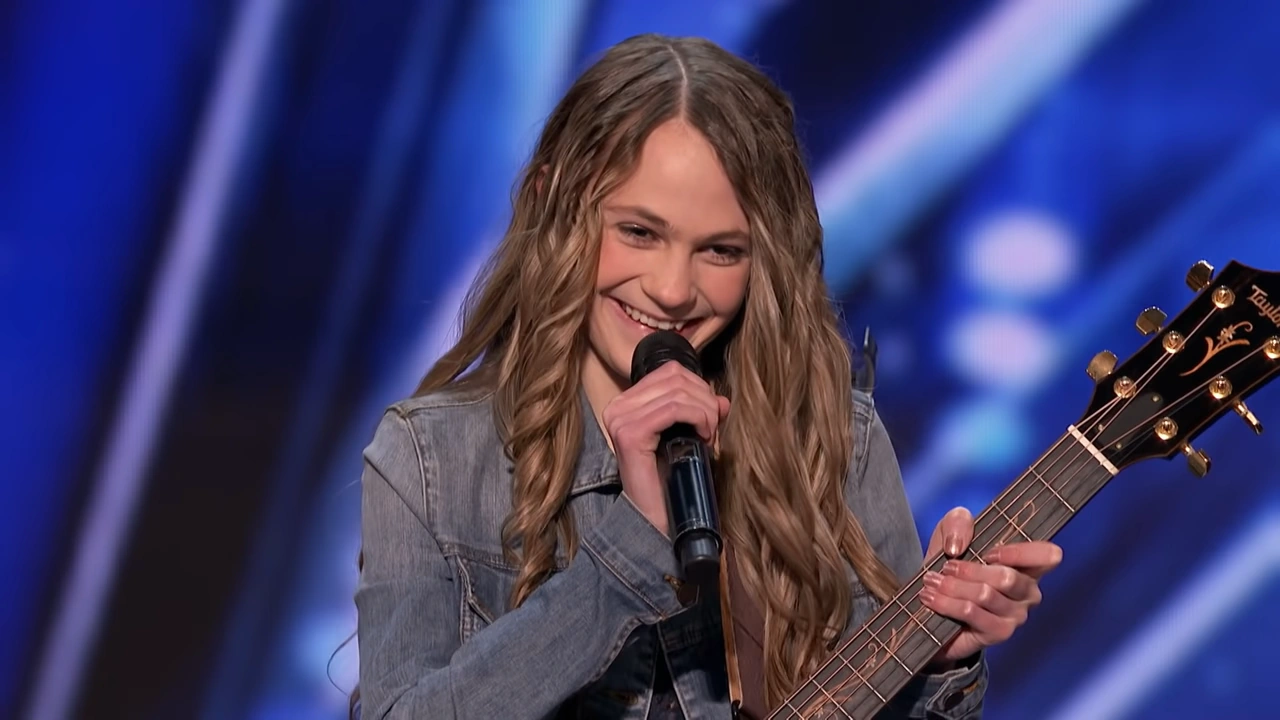
Kenadi Dodds, a 15-year-old country singer from Utah, walked onto the America’s Got Talent stage carrying more than just a guitar — she carried a story that would quickly make the room fall silent. She explained, with the steady composure of someone who has lived with both fear and hope, that her family is affected by a genetic eye disease that causes progressive vision loss. While Kenadi herself hasn’t shown symptoms, her younger sister has, and Kenadi revealed a heartbreaking wish: she wanted to perform on the world’s biggest stage so her sister could see her before the disease took that ability away. The mix of tenderness and urgency in that admission made it clear this audition was about more than career ambitions; it was about family, memory, and love.
That context reframed everything that followed. When she introduced her original song, “One Way Ticket to Tennessee,” the audience leaned in as if hearing someone tell a secret that mattered. Kenadi said the song was a tribute to her parents’ support, small sacrifices, and quiet encouragement — the late-night drives to lessons, the folded laundry waiting at home after a long rehearsal, the way a family rallies around a dream even while living with a looming diagnosis. Those little details grounded her story in ordinary moments that many families would recognize, making the stakes feel immediate and personal.
From the first chord, Kenadi’s authenticity was impossible to ignore. Her voice carried that warm, earnest quality often associated with country storytelling, but it also had an emotional clarity that made each lyric land like a conversation rather than a performance. She didn’t hide behind vocal gymnastics; instead, she let the song breathe, allowing tenderness and grit to alternate like seasons. In the quieter verses she softened her tone just enough to be intimate, and then at the chorus she opened up with a raw, hopeful conviction that filled the theater. The dynamic gave the song shape and made the central plea — to be seen and remembered — feel universal rather than solely autobiographical.
Small stage moments amplified the song’s emotional weight. Kenadi’s eyes would briefly drift toward the audience as she sang the lines about family, as if imagining her sister in the crowd. Her fingers on the guitar weren’t showy; they were functional and sure, supporting the story rather than distracting from it. At a pivotal bridge she allowed a slight break in her voice, a humanizing touch that suggested these lyrics were not just written but deeply felt. Those micro-moments made the performance both vulnerable and brave — a teenager singing not for fame but to capture a memory for someone she loves.
The judges’ reactions tracked the arc of the room. Initially attentive and polite, they soon shifted into visible admiration. Howie Mandel remarked that she seemed to “transform” when she performed, as if the stage unlocked a different, more assured part of her. That observation captured something essential: Kenadi’s stage presence wasn’t manufactured; it was the natural consequence of someone who knows why they’re singing. Simon Cowell praised her authenticity and the clarity of her musical direction, pointing out that she seemed to know who she was as an artist and where she wanted to go. Such comments from judges who see talent daily felt less like generic praise and more like recognition of a genuine artist in the making.
The audience’s response was the kind you hope for when a performance is honest: sustained, heartfelt applause that swelled into a standing ovation. It wasn’t merely admiration for vocal skill; it was gratitude for a moment that made people think about family and fragility, about seizing opportunities while you can. You could imagine Kenadi’s parents in the crowd, blinking back tears, and her sister watching — perhaps holding onto the memory with the fierce urgency her family described. That image made the audition feel like a small act of courage with a wide ripple effect.
Beyond the immediate reaction, Kenadi’s choice to perform an original song mattered. In a world saturated with covers and reinterpretations, bringing an original composition signaled artistic confidence and songwriting maturity. It said she wasn’t just performing to impress judges; she was presenting a piece of herself, warts and all. That decision deepened the emotional payoff: the judges weren’t applauding a well-executed cover, but a young songwriter’s attempt to capture a complex family reality in melody and words.
When the votes were tallied, Kenadi received a unanimous “yes” from all four judges — an endorsement that felt earned and fitting. The affirmative votes did more than advance her in a competition; they validated a young artist’s choice to use her talent for something tender and urgent. For viewers at home, the audition was a reminder that music can be a vehicle for memory, a way to press a moment into time before circumstances change. For Kenadi, it was a chance to give her sister a gift that would live in the mind long after the lights dimmed: the image and sound of a sibling pouring her heart out on a stage so that the person she loved most could see it.
In the end, Kenadi’s audition was as much about resilience as it was about talent. It showed how a family’s struggle can become a catalyst for artistic expression and how a young artist can channel fear into a performance that comforts, honors, and inspires. She left the stage having not only impressed the judges but also having created a memory that might mean everything to her sister one day.