
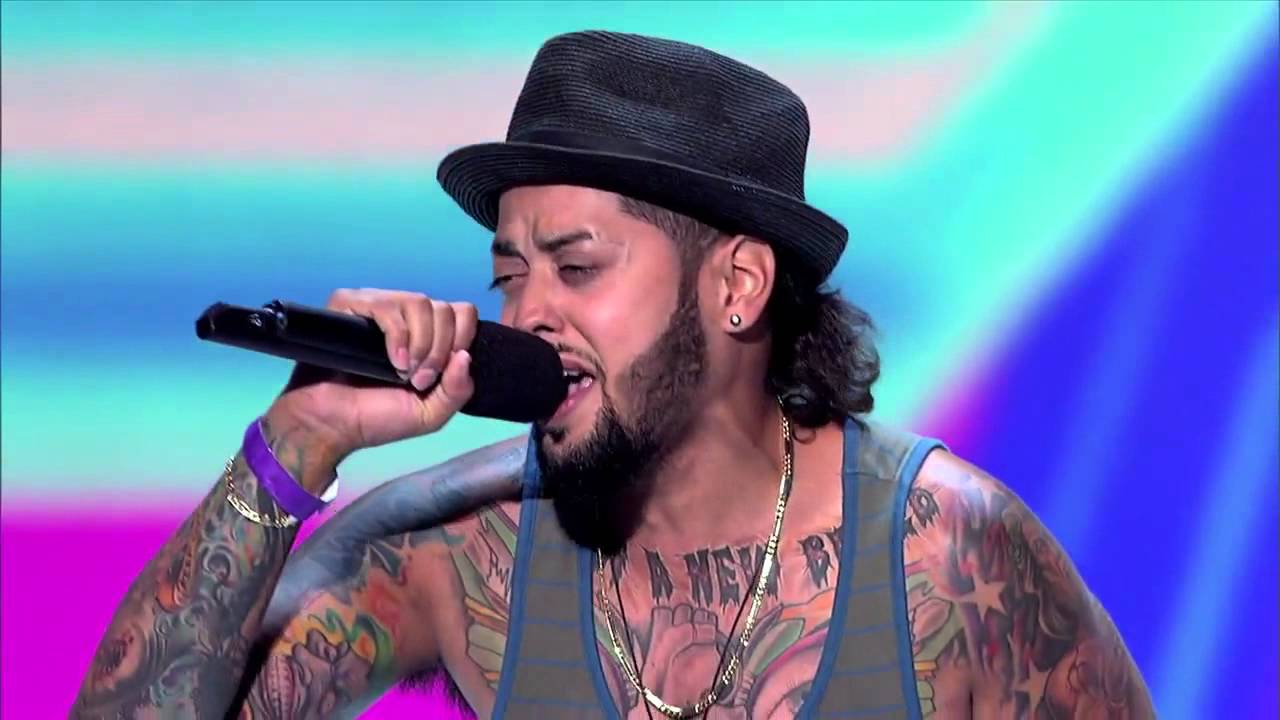
David Correy’s journey is nothing short of a masterclass in raw emotion and relentless determination — a story that gripped the nation because it felt so unmistakably human. Imagine spending thirteen hours on the road, driving through not one but two treacherous thunderstorms, windows occasionally streaked with rain and visibility reduced to frustrating blurs of taillights and road signs. That’s the kind of physical and mental exhaustion David carried with him when he finally stepped onto the stage. He wasn’t there to pursue fame as an abstract goal; he was there with a single, aching mission: to reach the biological mother he had never known.
The scene before his audition was already charged, but what made it unforgettable was how personal the stakes were. Each note he sang felt like a direct line to someone he’d spent a lifetime wondering about. You could see it in the way he inhaled — a small pause, a shiver of nerves — and in the way his voice rose, not just to hit the right pitch but to speak a truth. When performers deliver technically flawless renditions, the applause is expected; when someone pours their whole life into a performance, the reaction becomes visceral. David’s rendition did the latter. It was a desperate, melodic message sent out into the world, one that carried the weight of his past, the uncertainty of his present, and the fragile hope for closure.
Technically, the performance was impressive. David demonstrated vocal control that suggested years of disciplined practice, but what set him apart was the emotional intelligence behind every phrase. He used dynamics to convey more than volume: a soft, vulnerable opening drew listeners in, and the controlled crescendos felt like the release of long-held emotion. There were moments when his chest tightened and his voice broke just enough to make the room hold its breath; those were the moments when talent and truth intersected. The judges — seasoned professionals who’d heard thousands of voices — went silent in a way that signaled something deeper was happening. The audience, too, seemed to shift from passive spectators to empathetic witnesses; many sat forward, eyes wet, as if they too were listening for a mother’s answer in the harmonies.
Small details made the story feel even more real. The way he clutched the microphone stand with both hands as if anchoring himself; the tear that traced down his cheek during a quiet bridge; the shaky smile he offered after the final chord, unsure whether to expect comfort or silence. These were not theatrical flourishes but honest reactions, and that honesty is what made the moment viral. Clips of his audition circulated across social platforms within hours, not because of flashy production or gimmicks, but because viewers recognized something primal: the vulnerability of a person risking everything for a chance at belonging.
Beyond the stagecraft and the social-media storm, the broader resonance of David’s story is what lingers. So many people have at some point searched for identity, for roots, for a place where their name and story make sense. David’s willingness to turn a private longing into a public plea tapped into that collective ache. It reminded viewers that the search for family isn’t always tidy or quiet; sometimes it’s messy, urgent, and visible. By risking everything on a single audition, he transformed a competition into a crossroads — a high-stakes gamble for a reunion that could heal an absence that had defined him for years.
This kind of courage is contagious. After his audition, strangers reached out with messages of support, people shared their own reunion stories, and some even offered connections and tips to help in his search. It demonstrated how one honest moment on stage can catalyze a network of compassion and action. The ripple effects weren’t limited to likes and comments; they translated into real-world momentum for someone who had already sacrificed so much just to be seen.
What makes moments like David’s stick with us is their ability to reframe what performance can be. It’s easy to think of auditions as purely professional stepping stones, but his was a reminder that art, especially music, is fundamentally about communication. When a song becomes more than melody and instead becomes testimony, it can change the atmosphere in a room and the direction of a life. David didn’t just sing to impress; he sang to be found.
In the end, his performance was more than a showcase of talent; it was a testament to resilience and a hopeful plea for connection. That combination of technical skill and unguarded emotion is rare, and it’s what made his moment one of the most memorable and emotionally charged segments in the show’s history. Whether or not the audition led to the reunion he sought, it undoubtedly redefined how millions understand the power of a single, brave act — a thirteen-hour drive, two thunderstorms, and one song, all braided together into an unforgettable search for home.