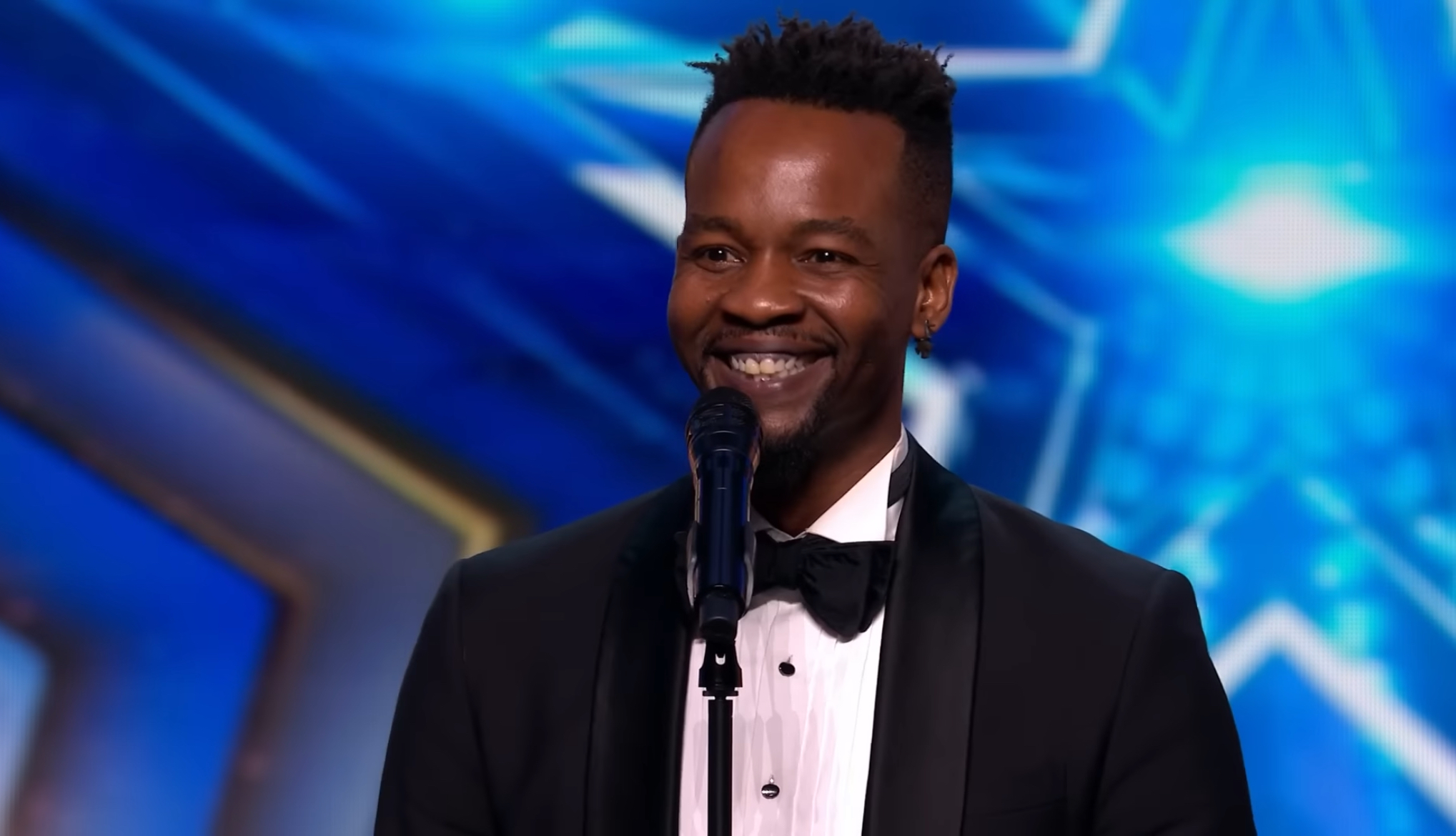
When Babatunde Akinboboye walked onto the Britain’s Got Talent stage, it was hard not to notice him. At forty, he carried himself with the calm confidence of someone who has traveled the world and knows the power of presentation. Impeccably dressed — tailored suit, polished shoes, an air of old-school showmanship — he had flown in from Los Angeles with a single-minded mission: to prove his talent on one of the most watched stages in the world. The judges and audience expected a polished, possibly operatic showcase from a man who looked like he belonged on big stages. What they didn’t expect was that he’d come to upend expectations entirely.
Babatunde opened the audition in a way that seemed familiar and safe. The backing music was lush and classical, and his voice emerged — a beautiful, powerful operatic tenor that filled the arena with remarkable clarity. There was something undeniably impressive about the control in his higher register, the way he sustained notes with a rounded, resonant timbre. For a few moments the performance could have been a moment out of a conservatory recital: dramatic gestures, full-bodied vowels, and the emotive sweep that classical singing demands. The camera cut to the judges, some nodding appreciatively, some leaning forward. The audience was already engaged.
Then, as the first aria phrases settled, Babatunde did something unexpected. The track shifted. The tempo changed, electronic beats layered in, and with a casual pivot he slipped out of operatic lines into rhythmic speech. One moment he was soaring above the room, the next he was delivering intricate, syncopated rap verses with the assuredness of a seasoned MC. The voice didn’t abandon its classical polish completely; instead, he fused the vocal techniques, riding a low, controlled rap cadence before flaring back into full-throated operatic exclamations. The result was a seamless, startling hybrid — a collision of high art and street energy that felt equal parts theatrical experiment and cultural statement.
Babatunde’s concept — quickly labeled by the judges as “Hiphopera” — was audacious. Where many acts pick one lane and try to master it, he intentionally blurred the lines between two seemingly incompatible genres. The operatic passages lent a grand, cinematic sweep to the performance while the rap sections injected urgency, rhythm, and contemporary relevance. He traded trills and runs for internal rhymes and breath-control-centric deliveries, demonstrating not just technical skill in both fields but an understanding of how to make them complement rather than compete. There were moments of breath-taking contrast: a soaring high note that hung in the air and was immediately punctuated by a crisp, staccato rap line; a sweep of vibrato smoothed into a spoken, syncopated hook.
The staging and styling helped sell the idea. Babatunde moved with a conductor’s precision, using small but effective gestures that emphasized the dramatic shifts — a tilt of the head as the strings swelled, an authoritative step forward as the beat dropped. His wardrobe echoed the melding of eras: classic tailoring paired with subtle modern accessories, hinting that he was both an ambassador of tradition and a contemporary artist. It all added up to a performance that didn’t feel gimmicky; instead, it felt like a considered artistic statement, the kind of risky creativity that can only flourish when an artist is confident enough to redefine boundaries.
The judges’ reactions mirrored how disorienting and exciting the act was. Alesha Dixon was effusive, loving the idea of making classical music “accessible” and “cool.” She spoke about the importance of bringing older forms of music into modern conversation, and how Babatunde’s approach could introduce opera to audiences who might otherwise never engage with it. Simon Cowell, typically the show’s most cautious evaluator, admitted he wasn’t personally sold on the song choices, but he couldn’t deny the concept’s brilliance. He acknowledged the “great idea” and stressed the commercial potential of an act that could bridge audiences from different musical worlds. Other judges pointed out the brave theatricality and praised the technical prowess necessary to pull off such rapid, stylistic switches live.
The divide in reactions didn’t indicate disapproval; rather, it showed how provocative the performance was. People were debating whether it was novel for novelty’s sake or the birth of a genuine new genre. The consensus, however, leaned toward the latter: Babatunde had managed to make something that felt fresh, thoughtful and, importantly, performable under the pressure of live TV. Where other acts rely on one standout skill, Babatunde offered multiplicity — and he delivered it with theatrical flair and vocal precision.
Ultimately, the panel found themselves won over. The combination of originality, skill, and charisma proved irresistible. Judges praised him as a breath of fresh air, someone who brought innovation to a format that often rewards familiarity. They awarded him a unanimous four “yeses,” sending his inventive act through to the next round. For Babatunde, that unanimous approval wasn’t just a validation of a performance; it was an endorsement of an idea: that music needn’t be confined by centuries-old rules, and that the dialogue between classical formality and contemporary rhythm could produce something thrillingly new. On a stage accustomed to safe bets and predictable choices, Babatunde’s Hiphopera stood out as a bold experiment that, at least for a night, made everyone rethink what a singing act could be.