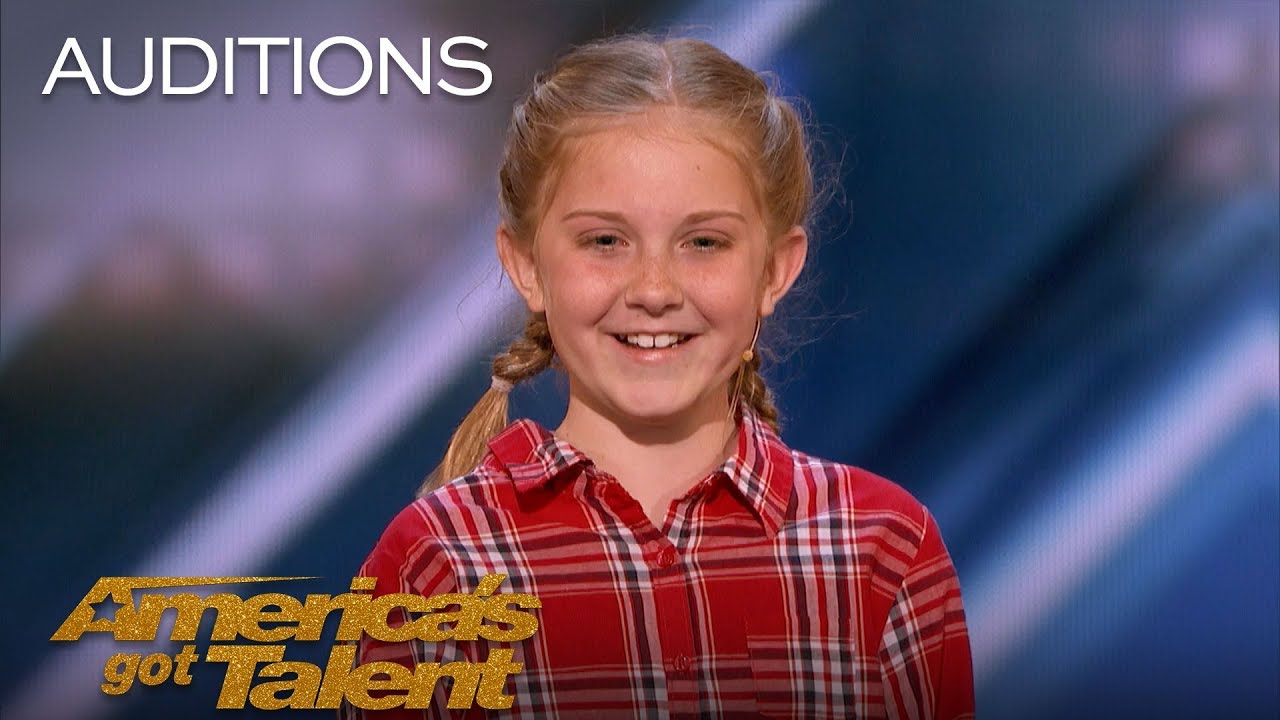
Lily Wilker walked onto the stage with the kind of calm confidence that comes from growing up with animals as your closest neighbors. She’s from a farm in New Bremen, Ohio, and you could almost see that landscape in the way she moved: steady, unhurried, comfortable in the space between sound and silence. Lily’s story is simple but charming — she started by mimicking the creatures she lived with every day, and what began as playful imitation at the breakfast table has blossomed into a remarkable little craft. Now, at eleven years old, she’s taken those first farmyard experiments and turned them into a wide‑ranging repertoire that spans the animal kingdom.
Her set felt like a friendly tour through the life of an animal lover. She opened with familiar barnyard sounds — a bright, insistent cluck that could have been a hen checking on her chicks, a low, conversational moo that had the room smiling before she finished the line. Those first impressions were warm and accurate in a way only someone who’s really listened to animals day after day could manage. You could tell she wasn’t parroting a caricature; she was recalling textures and rhythms: the way a goat’s bleat stumbles into a hiccup, the way a horse’s neigh rounds out at the end like punctuation. Small details made all the difference — the breathiness of a cat purr, the nasal twang of a llama, the quick, high‑pitched peeps of a baby chick.
From the farm she expanded outward, and that’s where Lily’s range became especially impressive. She didn’t stop at domestic animals; she shifted effortlessly into the cry of a toucan, the rasp of a seal, and even a surprisingly convincing elephant trumpet that filled the auditorium with a gentle roar. Those transitions felt natural — one moment you were in a country barn, the next you were on an imaginary shoreline or in a jungle canopy — because Lily’s voice carried the spatial clues of each animal. She’d soften for a woodpecker, tighten for a cricket, and then open up into a booming, theatrical call for something larger, like a lion. The effect was part performance and part affectionate anthropology: she treated each sound like a character with its own mood.
What made her act more than a checklist of noises was the way she paired imitation with personality. When she did the family dog, she became playful and bouncy, tilting her head the way a pup does when it’s waiting for a cue. For an owl, she dropped her shoulders, widened her eyes, and adopted a patient, observant voice. These small physical choices sold the audio impressions and made them feel alive. The judges’ reactions told the rest of the story: surprise, delight, and an almost parental fondness. One judge laughed out loud at a particularly perfect raccoon chitter, another covered their mouth in disbelief at a near‑human rendition of a kookaburra. Between the sounds, they peppered her with questions — How long have you practiced? Where did you learn that sound? — and her answers were pleasantly unassuming: mostly by listening, mostly by playing.
Family support was woven through the whole thing. Lily spoke about practicing with the animals on her farm, and you could picture afternoons spent copying a farm cat’s trill or a pig’s snort while chores went on around her. That image made the performance feel intimate and earned. It also explained her ear for nuance; living with animals teaches you to listen to the little variations that make each individual different. She didn’t imply she had to be perfect; she celebrated the messy, curious ways animals communicate. That humility helped the audience connect — they sensed a kid doing something joyful and generous rather than a tiny prodigy checking off feats.
There were tender moments too. After a burst of louder, funnier sounds, Lily would sometimes lower her voice and offer a soft purr or a gentle whale song that lingered in the air. Those softer passages reminded you that animal voices aren’t just for spectacle — they carry a kind of language about comfort, loneliness, play. A few people in the crowd wiped their eyes when she did a quiet, mournful call that sounded like a distant dog searching for home. The emotional variety made the set feel human as much as it was about animals.
Technically, what she does is impressive for any age. She shows excellent breath control, clear enunciation of different timbres, and the ability to sustain a sound without losing character. But the real charm is her joy. She laughed at her own jokes, she grinned when a sound landed, and she made the audience feel like co‑conspirators in a game she’d been playing since she could talk. When she finished, the applause was immediate and unabashed — people rose, not out of formality, but because they had genuinely enjoyed the ride.
Lily Wilker’s act is a reminder that talent often grows out of curiosity and the simple act of paying attention. She started on a modest farm in New Bremen, copying the world around her, and from there she expanded into something that delights strangers and stirs judges who’ve seen it all. Watching her perform you’re struck by the rare combination of skill and heart: an observant little performer with a big, warm voice who invites us to listen closely to the world we share with animals. Check out her impressions and you’ll leave grinning — and maybe a little more tuned in to the chorus of life that surrounds us every day.