
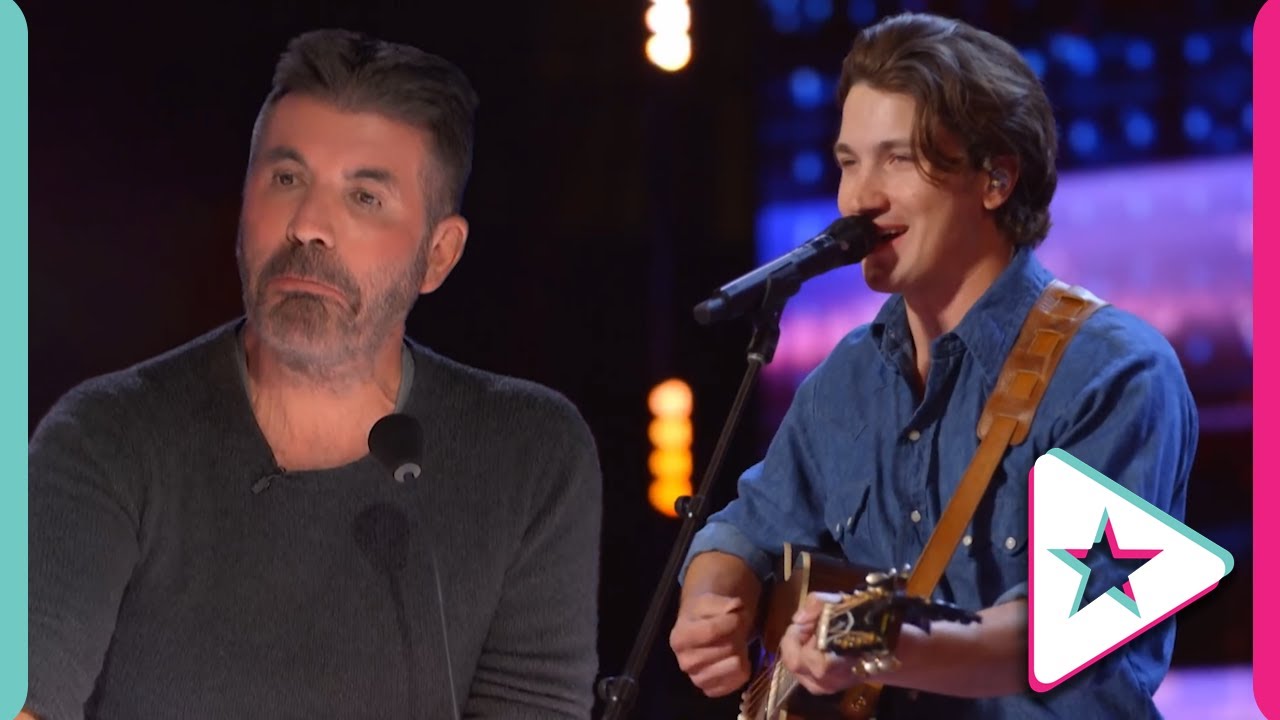
When Drake Milligan stepped onto the America’s Got Talent stage in 2022, he did something a lot of hopefuls on that show don’t: he brought an original. Instead of choosing a familiar cover to win over the crowd and judges, the Texas singer strode out with his band and launched straight into “Sounds Like Something I’d Do.” It was a gutsy move — originals can be a gamble on television built to reward instant recognition — but from the first note it became clear the risk was calculated. The song introduced Drake not just as a good singer, but as an artist with a clear identity and a sound that felt lived-in, not manufactured for a moment of TV fame.
Right away the performance had the ease and flow of a proper concert rather than the nervousness of an audition. The band locked into a classic country groove: warm upright bass, crisp brushes on the snare, a twangy electric guitar that tasted like honky-tonk, and subtle steel-laden fills that gave the arrangement emotional color without overpowering the lyrics. Drake’s voice slid into that arrangement naturally. There was a vintage sheen to his delivery — a hint of Elvis-style swagger wrapped in the steadier baritone of traditional country — and he carried himself like someone for whom performing onstage was familiar territory, not novelty exposure.
Small details made the performance feel authentic. He wore a jacket and boots that felt more road-ready than red-carpet, the kind of outfit that says “I’ve played real bars and small theaters” rather than dressing to impress television cameras. When he sang a line about regret, he leaned into the mic just enough to make the lyric sound like a confession shared across the table in a dimly lit bar. On the chorus he opened up, letting the voice bloom with a controlled grit that gave the melody emotional teeth. Those shifts between intimacy and swagger made the song more than a showcase of vocal chops — they made it a story being told.
The audience response mirrored that feeling. Early applause was appreciative but tentative, the way a crowd listens when they aren’t sure what they’re about to receive. By the first chorus, people were nodding, and faces in the front rows began to register surprise and approval. Cameras cut to the judges, and you could read the shift: smiles, leaning forward, the kind of visible recognition that a performer is making an immediate connection. NBC later noted that this song was the introduction that solidified Drake’s presence on AGT, and that initial rapport clearly mattered. It’s different, after all, when a contestant arrives as an artist with a full artistic language rather than as a mimic of someone else.
Critics and commentators picked up on that right away. American Songwriter highlighted how quickly Drake stood out, pointing to his classic country tone paired with an entertainer’s flair. Howie Mandel’s offhand dubbing of him as the “new Elvis of country” — later repeated in coverage — wasn’t just colorful praise; it hinted at how Drake fused influences into a persona that felt both nostalgic and fresh. That blend helped him avoid feeling derivative. Instead, he occupied a lane that felt his own: the bright lights of showmanship combined with the grounded songwriting of country tradition.
Another reason the audition resonated was the sense of confidence Drake projected. He didn’t seem desperate to prove technical superiority; he seemed determined to prove artistic worth. When he smiled at a tasteful instrumental break, you could tell it wasn’t performative — it was the smile of someone genuinely enjoying the music and trusting the audience to enjoy it too. That kind of assurance is magnetic onstage. It makes viewers stop parsing flaws and start imagining possibilities: what could this person do with a record deal, with a tour, with an audience that already feels connected?
The original song itself gained a life beyond the moment. “Sounds Like Something I’d Do” became tied to Drake’s story on the show; it wasn’t just a performance clipped for social media, it was the phrase people used when describing his breakout. The tune turned into a calling card — the signature that would carry him all the way to the AGT Season 17 finale. For many viewers, the song marked the first time they heard Drake and understood the shape of his artistry: classic country storytelling with a performer’s magnetism.
Looking back, that audition reads as a turning point. On a program designed to spotlight a wide range of talents — singers, dancers, magicians, variety acts — Drake used his opening moment not merely to sing well but to claim a distinct musical identity. He didn’t hide behind covers or try to ride someone else’s fame; he introduced himself on his own terms. The result was an audition that felt like the beginning of a career rather than the end of a tryout. It’s a reminder that sometimes what stands out on TV isn’t the most polished imitation, but the clearest introduction to who an artist really is.