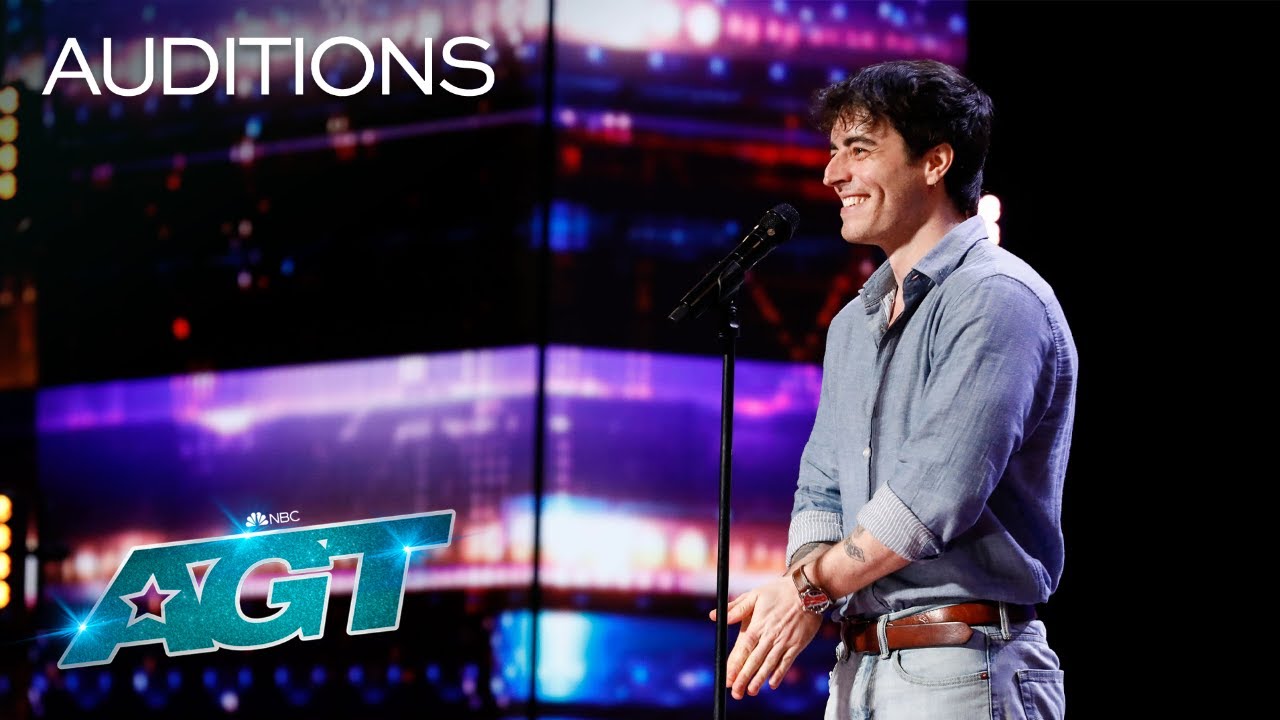
When the Nicotine Dolls walked onto the stage, there was a comfortable confidence about them — leather jackets, a small cluster of vintage amps, and the kind of easy swagger a band develops after years of playing dive bars and late-night sets. Still, on a television talent stage, bands often play it safe with covers that everyone knows. So when the lead singer stepped up to the mic and announced they would perform an original song, you could feel the room tilt just a little: that choice is a gamble. Originals can either reveal a distinct voice or get lost in the noise. Tonight, it became the former.
The song opened with a gritty guitar riff that felt both immediate and cinematic, the kind of hook that grabs your attention while leaving space for the voice to do the storytelling. The arrangement was tight — drums with a steady, propulsive groove, basslines that pushed the chorus forward, and a jangly rhythm guitar that filled out the midrange without crowding the lead. But the moment that truly hooked listeners was the singer’s voice. It cut through the band in a way that was impossible to ignore: raw but controlled, with a resonance that suggested both lived experience and a natural instrument honed by nights onstage.
From the first line, judges who had perhaps been prepared to be polite suddenly leaned in. The vocal tone had an unusual timbre — a slightly rasped edge on sustained notes, a warm lower register that made verses feel conversational, and an airy lift in the chorus that gave the melody an untethered quality. There were technical choices that implied training and taste: tasteful grit instead of forced rasp, clear diction that made every lyric register, and phrasing that left room for silence as much as sound. He didn’t aim to impress with acrobatics; instead he used dynamics and a well-placed break to let the emotional thrust of the lyrics land.
Lyrically, the song favored specific images over vague platitudes. Rather than leaning on broad declarations, the verses painted small scenes: a neon sign buzzing in a motel window, two people trading promises over stale coffee, the backseat of a car smelling of rain and motor oil. Those details gave the chorus more weight — when the hook landed, it wasn’t just a catchy line, it felt like the resolution of a brief, lived-in story. That kind of songwriting invites listeners in. It’s the difference between a generic anthem and a song that lingers because you can picture the setting and the characters.
Stagecraft amplified the moment. The camera work alternated between close-ups of the singer’s face — the way his jaw clenched on a hard word, the micro-expression when a chorus hit — and wide shots of the band locking in. Lighting moved from moody amber during the intimate verses to brighter, cooler washes in the chorus, visually mirroring the song’s emotional lift. The singer’s presence wasn’t about showboating; it was about connection. He made eye contact with the camera as if addressing an old friend, and at times he retreated into the music, eyes closed, letting the rawness show through.
Audience reaction mirrored the shift in tone. Early applause was polite but curious; as the chorus swelled and the singer revealed the emotional center of the song, the applause turned to genuine appreciation. People were nodding, some holding their phones up to record not because they expected virality but because they wanted to remember the moment. Judges’ faces went through that familiar arc: supportive smiles became furrowed brows of concentration, then surprised, openly impressed expressions. One judge mouthed a single word at another — “wow” — and a ripple of laughter and applause followed at the end of the performance.
The risk of an original song on a televised stage lies in the need for instant connection, and the Nicotine Dolls managed that with both craft and authenticity. Choosing to present an original required confidence in the song and in the singer’s ability to deliver it without the safety net of a familiar melody. That gamble paid off — not only did they avoid the trap of sounding derivative, they carved out an identity. The band sounded like a unit: tight, sympathetic to the lead vocal, and willing to pull back when the lyric needed room.
After the last chord faded, the applause was immediate and sustained. Judges offered praise that felt specific rather than generic, complimenting the songwriting, the lead vocal’s raw texture, and the band’s cohesiveness. They asked a couple of follow-up questions about the song’s inspiration and the band’s history, prompting anecdotes about late-night writing sessions in cramped practice rooms and the small-town stories that shaped the lyrics. Those human details made the judges’ praise feel like validation from peers rather than mere television platitudes.
What lingers about the performance is the sense that the Nicotine Dolls did more than score a good TV moment — they introduced themselves as artists with something to say. The lead singer’s voice, the carefully chosen imagery in the lyrics, and the band’s willingness to take a risk combined to create an audition that felt like the start of a larger story. For viewers, the immediate takeaway was simple: you don’t often hear a voice that makes you stop scrolling. For the Nicotine Dolls, it was the kind of break that transforms curious listeners into invested fans.