
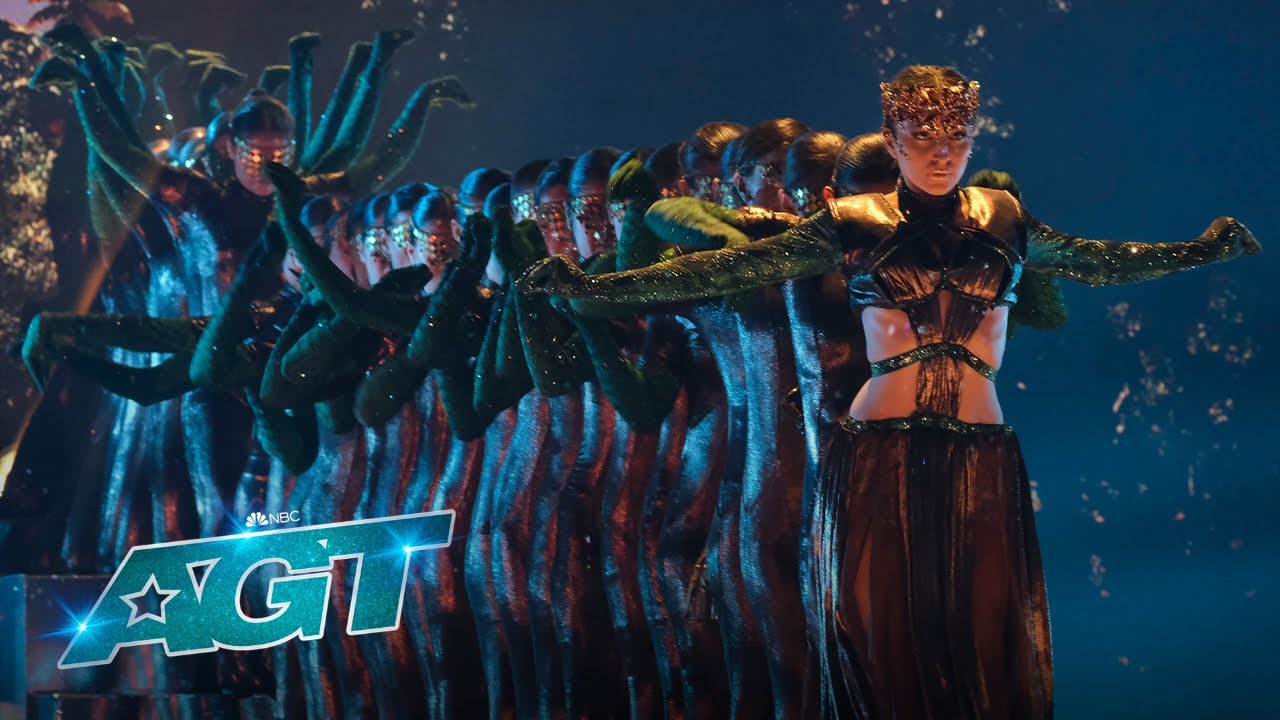
When the lights dimmed and the first act stepped onto the stage, there was an electric hum in the air that told you something special was about to happen. That night, three very different groups—Mayyas, Unicircle Flow, and Fusion Japan—each in their own way took that electricity and turned it into performances so precise and thrilling that the audience repeatedly forgot to breathe. One after another, they delivered moments that felt less like acts and more like experiences, leaving everyone in the theatre with mouths open and phones out, trying to capture what words could barely describe.
First up were Mayyas, the all-female dance collective whose reputation for cinematic choreography and razor-sharp synchronicity precedes them. From the moment they moved as one, it was clear why they’ve become a phenomenon. Their routines blend contemporary dance with theatrical geometry: bodies fold into shapes that look engineered, then unspool into waves of motion that feel organic and utterly human. Small details made their set unforgettable—a perfectly timed silhouette created by a single raised arm, a cascade of fabric that turned into a visual echo, and the collective inhalation of the group just before a massive, heartbeat-like stomp. The group’s emotional range also landed hard; they didn’t just wow with technique, they told a story through physicality—moments of vulnerability washed into moments of ferocity, each transition tight as a drumbeat. When the final tableau held, the silence lasted a beat too long before erupting into an all-consuming roar. For many, it felt like watching choreography meet collective willpower.
After that raw intensity, Unicircle Flow arrived with an almost opposite energy—playful, kinetic, and impossibly fluid. They are masters of flow arts, juggling and manipulating objects with a poetic ease that makes physics look optional. Imagine balls, hoops, and batons becoming extensions of the performers’ limbs, flying and returning with such timing that doubt about gravity itself briefly disappeared. What’s remarkable about Unicircle Flow is how they blend technical wizardry with humor and humanity. A tricky toss that could have felt sterile instead turned into a wink at the audience; a near-miss was met by a knowing smile and a recovery so graceful you applauded the tension release. Their set was punctuated with synchronized sequences where multiple objects orbited like small planets, and a quieter passage where a single illuminated hoop traced calligraphic lines against the dark—an intimate moment after a series of kinetic crescendos. The audience responded with delighted laughter and stunned silence in equal measure, proof that spectacle can be both breathtaking and joyfully human.
Then came Fusion Japan, who somehow fused tradition with modernity into a performance that felt both ancient and immediate. They brought the kind of theatrical craft that can only come from deep cultural roots and relentless rehearsal. Drumming, movement, and precision choreography blended in a way that felt ritualistic—every beat, every stance, and every footfall seemed to carry the weight of intentionality. In one sequence, a simple percussive pattern built into a complex polyphony, each member contributing a rhythmic voice until the stage sounded like a living organism. Visually, the group used contrast brilliantly—burnished costumes against stark lighting, slow ceremonial movements suddenly exploding into rapid, machine-like formations. You could have closed your eyes and simply listened and felt carried along by the pulse. The final moments were a lesson in controlled power: a coordinated rush that left the stage shimmering and the audience unable to clap fast enough.
What united these three groups, beyond raw talent, was a shared sense of identity and purpose. Mayyas communicated a communal grace and fierce intent; Unicircle Flow celebrated playful mastery and audacious creativity; Fusion Japan honored tradition while reimagining it for a global stage. Each act had its own vocabulary—movement, props, rhythm—but all three spoke directly to the crowd’s visceral senses. That’s why the reactions weren’t just polite applause; they were the kind of standing ovations that make you feel part of something larger than yourself, a room collectively acknowledging that it had just witnessed something rare.
Small audience moments lingered afterwards. You could see people wiping tears, not from sadness but from the sheer overwhelm of beauty and skill. Conversations outside the theater were quick and fevered—“Did you see that finish?” “How did they sync that?” “I’ve never felt anything like Mayyas’ last pose.” Clips from the night filled social feeds within minutes, each clip struggling to encapsulate what is best experienced live: the air-pressure drum hits, the soft hush before a unison move, the face of a performer at the exact second they land a trick.
In a world where entertainment often leans on noise, these three groups reminded everyone why live performance still matters. They showed how choreography can carve emotion into space, how objects can be animated into poetry, and how cultural practices can be reinvented without losing their soul. By the end of the evening, when the lights finally came up, the applause kept going—not just for flashy moments, but for the common thread that ran through every act: absolute commitment to craft. That’s the kind of night that lives on in memory, the kind that leaves your jaw on the floor and, more importantly, your heart a little fuller.