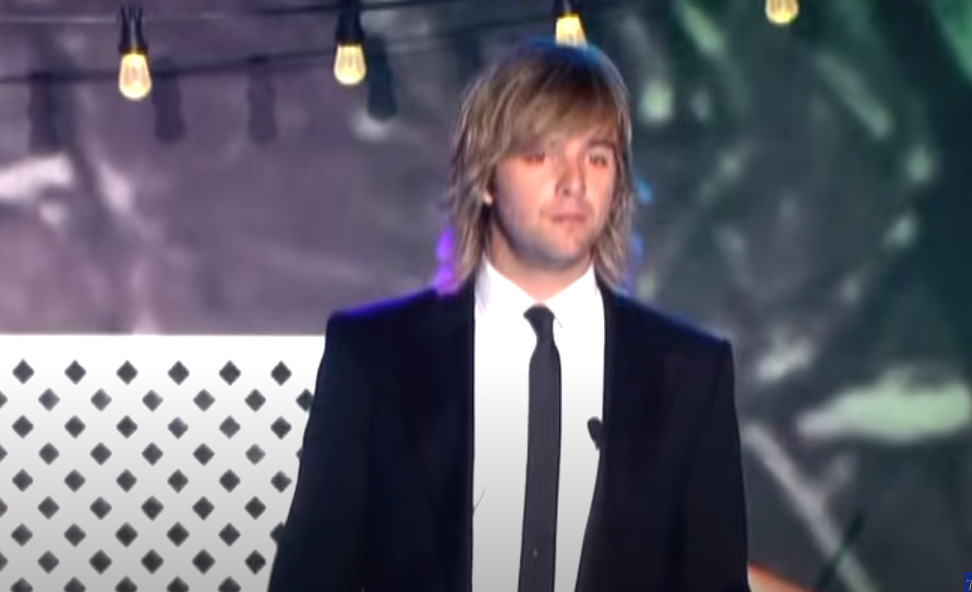
The band Celtic Thunder made their stage debut after embarking on a once-in-a-lifetime tour of North America. On the team’s official website, it states that they have performed for over 3 million classical music enthusiasts worldwide, and this is just the start.
What’s striking about Celtic Thunder is that their story doesn’t feel like a polished PR line—it feels like a genuine musical journey that kept snowballing in ways no one fully predicted. Their debut wasn’t just a local concert or a small-stage experiment; they stepped into the spotlight while already on the road, carrying their music across massive distances, new cities, and unfamiliar audiences. That first tour of North America felt like a challenge and a promise at the same time: could a group rooted in Celtic traditions truly captivate such a wide, modern audience? Their growing popularity suggests that the answer was a resounding yes.
Imagine the early days of that tour: strange airports, endless bus rides, quick meals in quiet corners of venues, and soundchecks in cavernous halls that were still empty, echoing only with the band’s voices and instruments. For a group debuting on such a scale, there must have been a mix of nerves and excitement—standing backstage, hearing the murmur of a crowd slowly filling in, the rustle of programs, the low hum of conversation. Then the house lights dim, a hush falls over the room, and the first notes spill into the dark. Those moments are what define a band’s identity long before awards or statistics ever do.
Part of Celtic Thunder’s appeal lies in the way they balance tradition and emotion. They draw deeply from Celtic and classical influences, but their performances are not stiff or academic. Instead, they seem designed to speak to the heart. In a typical show, you might hear a powerful, orchestrated arrangement of an old folk ballad followed by a quieter, more intimate song that allows a single voice—and a single story—to shine. That contrast keeps listeners engaged and emotionally invested. It’s not just about technical skill; it’s about making every person in the audience feel like the music is speaking directly to them.
And somehow, they’ve managed to do this not just once or twice, but over and over, in venues around the world. The fact that they’ve performed for more than 3 million classical music enthusiasts is impressive on its own, but the number also hints at something deeper. Those millions of listeners didn’t come only for nostalgia or curiosity; many of them left feeling moved, inspired, or pleasantly surprised by how fresh and alive this style of music can be.
Think of the diversity of those audiences: older listeners who grew up with traditional music, younger fans who discovered the band online, people with Irish or Scottish roots wanting to connect with their heritage, and others who had never heard a Celtic song before in their lives. In a theater in Boston, for instance, the crowd might include entire families—grandparents, parents, and teenagers—sharing a night out. In a concert hall in Toronto or Chicago, you might see people closing their eyes during a haunting slow air or clapping along to a rousing chorus, swept up in the energy of the moment.
It’s also easy to imagine how these concerts play out behind the scenes. The band members likely have their own quiet rituals before a show: a warmup in a dressing room, a shared joke to ease the tension, a last-minute run-through of a tricky harmony. There’s a feeling of camaraderie, of a team pulled together around a common passion. Even after so many performances, walking out into that wash of stage lights and facing a sea of faces probably never becomes truly ordinary.
The description on their website—“this is just the start”—feels remarkably fitting. It suggests that Celtic Thunder sees their journey not as a finished chapter, but as a living, evolving story. Every tour, every city, every new audience adds another layer. New arrangements can emerge from an old melody. A chance conversation with a fan at a stage door might spark an idea for a song. A particular venue, with its own history and acoustics, can influence how a performance feels and how a piece is interpreted that night.
Their ongoing success hints at future possibilities as well. There’s room for collaborations with other artists, experiments with new sounds or visual elements, and perhaps even more intimate shows that highlight the stories behind the songs. Technology plays its part, too: recordings, live streams, and social media clips give fans a way to carry pieces of the experience home and share them far beyond the concert hall. Someone stumbling across a performance video late at night might find themselves drawn into a world of music they didn’t even know they needed.
What makes their journey especially compelling is that it’s built on a simple but powerful foundation: sincere performance. No matter how large the crowd or how grand the stage, what ultimately matters is whether the music connects. Celtic Thunder’s history of touring, their huge worldwide audience, and their confident message that “this is just the start” all point to a group that understands this very well. They’ve proven they can capture the hearts of millions, and yet they carry themselves as if there are still countless stories to tell, countless listeners to reach, and countless nights when the lights go down, the first note sounds, and the magic begins all over again.