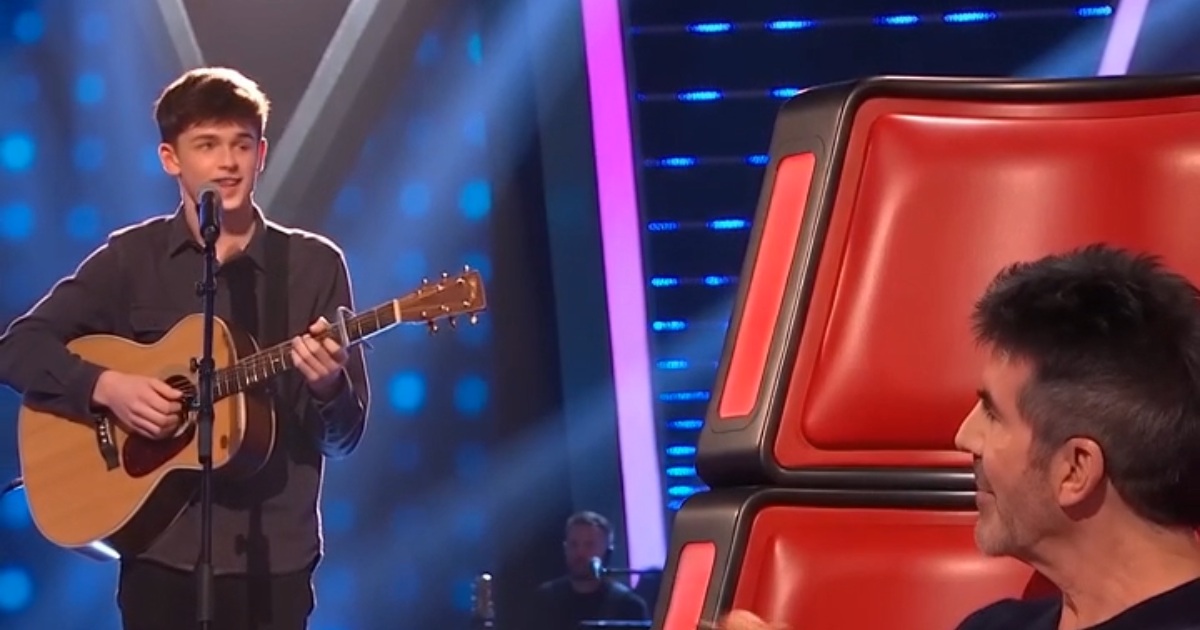
Twenty-two-year-old Robbie Kennedy from Cwmbran, South Wales, walked onto the Britain’s Got Talent stage with an unassuming, easygoing air that made you want to like him right away. He introduced himself plainly: a bricklayer by trade, six years on the tools, hands used to mortar and weather rather than microphones and spotlights. There was a kind of blunt honesty in the way he spoke — the straightforwardness you get from working outdoors, where the day is measured in lifts, courses, and the small satisfactions of a job done properly. He explained that singing wasn’t his profession but a passion he’d quietly nurtured for four and a half years. The image he painted — teaching himself guitar via YouTube between shifts, playing a half-hour set down the local pub, living at home with Mum and Dad — made his appearance on a national stage feel improbably charming and wholly believable.
Those small, domestic details did more than set a scene; they lowered expectations in a way that heightened the eventual reveal. When someone says they learned chords in spare hours on YouTube and that their biggest gig before this was a pub set, you picture a competent amateur. The judges and the audience received him with that relaxed curiosity — a polite clap, a few encouraging smiles, a sense of “let’s see what he’s got.” But there was an undercurrent of curiosity too, the unspoken question: could this bricklayer really hold his own under this kind of pressure? Robbie answered that question the moment he picked up his guitar.
He started with an acoustic piece that immediately showcased a voice you wouldn’t expect from someone who spends his days laying bricks. The opening lines came out warm and resonant, a natural baritone that carried both weight and tenderness. There was a maturity in his tone — not flashy, not trying too hard, but steady and honest. Even in the quieter verses his pitch was secure, his phrasing measured, and he allowed the song to breathe rather than forcing it forward. Those choices spoke of someone who had learned to listen to his instrument and to himself, perhaps during long evenings at the kitchen table practicing while a kettle boiled in the background.
As the performance unfolded, the audience’s posture shifted. What had been polite attention turned into genuine engagement. You could notice it in the small ways: heads leaning forward, the quiet falling away, someone in the front row biting their lip. When Robbie reached the chorus and opened up, the sound filled the auditorium. His voice gained a richer color, brighter harmonics, and an urgency that made people sit up. Some in the audience covered their mouths in astonishment; others were simply staring, transfixed. It felt like watching a slow reveal — the steady, surprising transformation from humble builder to compelling artist.
Then came the moment that changed the whole arc of the audition: mid-song, the music shifted and Robbie moved into the Goo Goo Dolls’ classic “Iris.” It was a bold pivot — switching songs mid-performance can feel risky or disjointed — but here it landed perfectly. The opening chords of “Iris” unlocked something deeper in his range. His control was exquisite; sustained notes were clean and resonant, and every lyric was delivered with an emotional clarity that never felt manufactured. There was a raw passion in the chorus, a surge that hit the room like a wave and left people catching their breath. For many in the theatre, that was the point when the narrative flipped entirely: this wasn’t a pub singer out of his depth, but someone with a voice capable of moving people profoundly.
The judges’ reactions were immediate and revealing. Alesha Dixon, who knows the craft of performance inside out, looked genuinely moved; she leaned forward and, clearly impressed, told Robbie he’d “been blessed with a true gift.” Amanda Holden, picturing his mates and workmates watching later, laughed and said they were in for a shock — “he’ll absolutely knock them dead,” she predicted. Simon Cowell, infamous for his tough critique, admitted he hadn’t expected such a revelation, even suggesting Robbie could score a mainstream hit if he recorded the song. Coming from Simon, that kind of praise carries real weight.
When the panel delivered four unanimous “yes” votes, the applause that followed felt like more than just approval — it was recognition. Hands slapped, feet stamped, and a standing ovation swept the studio as if to say, “We see you now.” Robbie had done more than secure a place in the competition; he’d shifted perceptions. Viewers could imagine his parents watching at home with swelling pride, and his mates from the pub realizing there was more to their friend than the after-work banter.
Beyond the immediate glow and the viral clips to come, Robbie’s audition carried a quieter uplift. It was a reminder that talent often simmers beneath the surface of ordinary lives: a young man balancing a demanding trade with late-night practice, learning from free tutorials and small gigs, driven by an earnest love for music. He walked onto a massive stage with no pretense and let his voice do the talking. In those few minutes he suggested a possible future where passion replaces profession — where the songs he once played in a local pub might one day reach millions.