
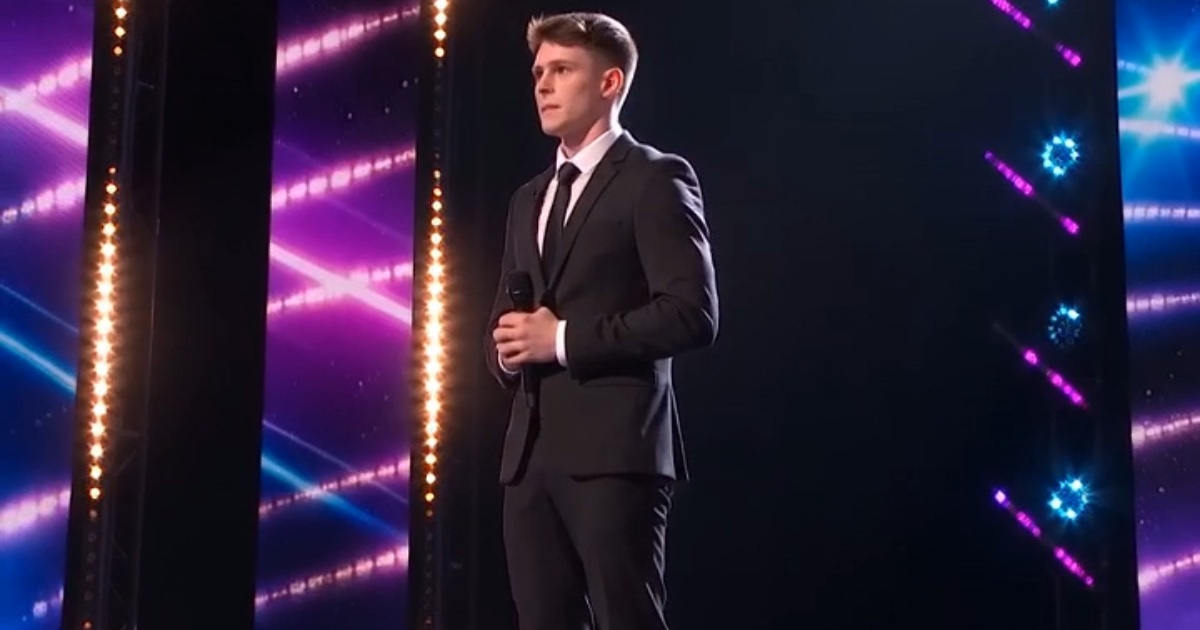
Twenty-three-year-old Tom Ball walked onto the Britain’s Got Talent stage with an easy, almost bashful charm that made him instantly likable. He introduced himself in the sort of modest way that suggested he didn’t expect to be the center of attention: a secondary school teacher from West Sussex who kept a surprising secret from the very people he teaches. That confession — that his students had no idea he could sing like that — added a delicious tension to the room. It wasn’t just another audition; it was a small, personal gamble. Tom admitted that if the performance went badly, it would be “really, really bad,” and you could see the stakes written on his face. Watching his fiancé and his dad sitting in the wings, you felt the private pressure of a man poised to reveal a part of himself he’d carefully kept hidden.
There was an immediate warmth to his manner: a nervous laugh, a quick glance toward his family, the slight slump of shoulders that suggested he would have been perfectly content to stay anonymous. That self-effacing posture only made the moment more intimate — as if he were confessing to a friend rather than addressing millions of viewers. The idea that this composed, gentle teacher harbored such a powerful talent created a compelling contrast before a single note was sung.
When the music began, something palpable shifted. The nervous tension didn’t dissolve in an obvious moment of bravado; instead, Tom seemed to quiet, as if drawing inward and letting the song take over. From the first line of “Writing’s on the Wall,” the audience and judges fell remarkably silent, not in boredom but in anticipation. His voice emerged with a clarity and richness that seemed almost at odds with the gentle, self-effacing man who had just spoken to the panel. The tone was a powerful tenor, full-bodied and surprisingly mature — the kind of voice that fills a room effortlessly and makes people sit up a little straighter.
There were small, memorable details in the way he sang that helped sell the moment. He held phrases with confidence, letting the final vowels ring rather than clipping them away, which gave the performance a cinematic sweep. You could almost see the lines of dialogue he might use in the classroom softened and reshaped into musical phrases. His breath control was impressive: he negotiated long, dramatic lines without sounding rushed or strained. When the melody climbed, he didn’t lean on loudness so much as on resonance, creating a sound that was both controlled and emotionally expansive. It wasn’t just about technical skill; there was real storytelling in his delivery. You could see him inhabiting the lyrics, the quiet desperation and steady determination woven into the song, and that emotional honesty is what turned a thrilling vocal into something deeper.
The camera caught small reactions that made the viewing experience richer. Amanda Holden’s face shifted from polite interest to open admiration, her eyes widening as if she were surprised in real time by the discovery. Alesha Dixon’s smile carried something like maternal pride, and even Simon Cowell — notorious for his measured expressions — seemed taken aback, leaning in as if to listen more closely. The reaction from the crowd and judges was instantaneous and heartfelt. Amanda called it “an exceptional audition” and went even further by saying it was “one of the best things we’ve had in the last 16 years.” That’s high praise on a show that has seen thousands of acts, and her words resonated because they came from a place of genuine surprise and admiration. Alesha’s comments added a warm, human perspective: she praised Tom for his “lovely character, personality, sweetness, humility,” noting that the combination of his singing talent and his endearing nature made the moment feel complete.
The dynamic in the room felt almost conspiratorial — as though everyone was in on the secret that had just been revealed. Tom’s fiancé and father, who had nervously watched from the wings, shared the sort of proud, astonished expressions that parents and loved ones do when someone finally takes the spotlight they deserve. His fiancé’s hand to her mouth, the way his dad’s eyes glistened, those tiny gestures gave the performance a family story quality. You could imagine his students on the other side of the camera, later scrolling through clips and saying, “That’s Mr. Ball? No way.” The idea that a schoolteacher could also be a performer of such caliber gave the audition a relatable quality. Many of us have hidden talents tucked behind everyday roles, and seeing someone step out from behind the classroom desk and into that bright light taps into a universal thrill.
When the judges conferred, the decision felt almost ceremonial. There was no dramatic hesitation, no split votes — just a swift, unanimous move to send Tom through. Four “Yes” votes rang out, and with them came the clear sense that everyone in the room wanted him to succeed. It was the sort of verdict that acknowledges not only a strong audition but also the courage of revealing a vulnerable truth. For Tom, the advancement was more than a ticket to the next round; it was confirmation that his secret no longer needed to stay hidden and that his voice could reach beyond the classroom walls.
As he left the stage, you could see the change in him: a lighter step, the quiet smile of someone who had finally been seen. The relief was tangible — not a triumphant roar, but the gentle contentment of a man who had risked embarrassment and been met with applause instead. The episode wasn’t just another televised audition — it was a little human triumph. It reminded viewers that remarkable things can come from the most ordinary places, and that sometimes the people who seem most unassuming hold the most stunning surprises. For Tom Ball, that moment marked the beginning of a new chapter: a teacher who can inspire in the classroom by day and move an audience to silence by night, proving that talent often thrives in the most unexpected people.