Max Fox had been carrying a quiet, stubborn hope for nineteen years. For nearly two decades he’d knocked on doors, mailed demo tapes, and stood in long, exhausting queues at auditions, always chasing the same dream: a single, undeniable chance to sing on a big stage. So when the opportunity finally presented itself—standing only about ten feet from the judges’ table—he didn’t hesitate. He walked forward, voice barely steady with nerves, and simply asked if he could have a moment to sing. That single request felt enormous, the weight of nineteen years compressed into one breath.
Initially, no one believed him. The judges traded skeptical glances and the production crew assumed it was a planned gag, the kind of light-hearted interruption that makes live TV unpredictable. Stage managers exchanged looks. An impromptu performance could throw the schedule off, risk technical problems, and break protocol. But Max was insistent and completely sincere. He wasn’t a plant or a prank; he was a man who had been waiting and rehearsing for nearly two decades. The tremor in his hands and the earnestness in his voice persuaded a stage manager to take a chance. Someone dove into the chaos, unbolted a phone from a camera cart, scrolled through playlists, and, after a tense minute, found the backing track for “My Way.”
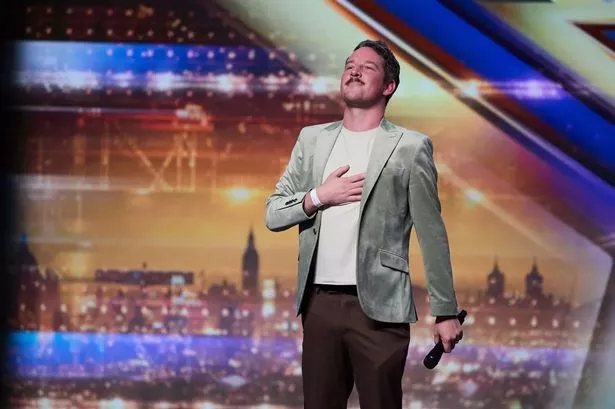
There was an old-fashioned, cinematic quality to the setup: one man, a borrowed phone, a classic Sinatra arrangement cued up, and a studio that suddenly hushed to listen. Max took a moment to compose himself—pushed back his coat sleeve, wiped his palms on his jeans, offered a small, almost apologetic nod toward the judges—and then positioned himself under lights that now felt less like interrogation lamps and more like the spotlight a lifetime in the making had finally found. The first notes were tentative, as if he were checking that his voice could carry the full weight of the story he was about to tell. Then something shifted.
As he sang, Max poured in everything he’d held onto over the years: the late-night car rehearsals, the lonely apartment mirrors, the nights he almost gave up. His voice moved from a guarded introduction to a rich, steady core that blossomed into a resonant, deeply personal rendition of “My Way.” He didn’t imitate Sinatra; instead he transformed the song into his own testament. His phrasing suggested hard-won experience, subtle dynamic choices revealed vulnerability, and the familiar lyrics became a narrative about perseverance. The studio felt intimate, like a small club where every listener leaned forward to catch each confession.
You could watch the skepticism melt away. One judge’s eyebrows rose in surprise; another covered their mouth, suddenly emotional, where mockery had been moments before. The audience, who had been amused by the interruption, fell utterly silent—captivated. Someone in the back reached for their partner’s hand. A camera lingered on faces in the crowd: eyes glistening, jaws slack with respect. It was the kind of performance that turns casual viewers into invested witnesses; the atmosphere shifted from entertainment to communal bearing witness.
When a judge later said the moment felt “like being in a movie,” it wasn’t hyperbole. There was a narrative arc in real time: underdog meets opportunity, tension gives way to reveal, music becomes a vehicle for a life’s longing. Max’s phrasing at the climactic lines felt like confession; when he landed those final sustained notes, the studio exhaled together. Silence held for a breath longer than usual—the kind that marks collective recognition of something rare—then applause rose, tentative at first, then swelling into heartfelt cheer.
And then came an outcome nobody saw coming. One judge, who had already used their golden buzzer earlier in the season, stood, walked forward, and—after a beat of stunned hesitation—pressed the golden buzzer a second time. The sound cut through the studio like a verdict. In that astonishing, unprecedented moment, Max was shot straight to the semifinals.
Backstage, the emotional fallout was immediate. Crew members who’d been part of the chorus of doubt were wiping their eyes. Fellow contestants embraced him—some laughing, some sobbing in relief. Max’s hands trembled as people crowded in to congratulate him, but when a grin finally broke across his face it was raw and real: disbelief braided with relief and joy. For him, the golden buzzer was more than a pass to the next round; it was validation of nineteen years of persistence, proof that one more ask could change everything.
What made the scene so unforgettable was the collision of small, human details with a beloved song: the frantic search for the backing track on a phone, Max’s nervous habit of wiping his palms, the hush that fell over people who moments earlier had been laughing. His choice of “My Way” felt less like showmanship and more like honesty—the right hymn for a life spent trying. Max’s story is a reminder that opportunities often arrive unannounced, and that bravery can be as simple as asking, one last time, for your moment in the spotlight.