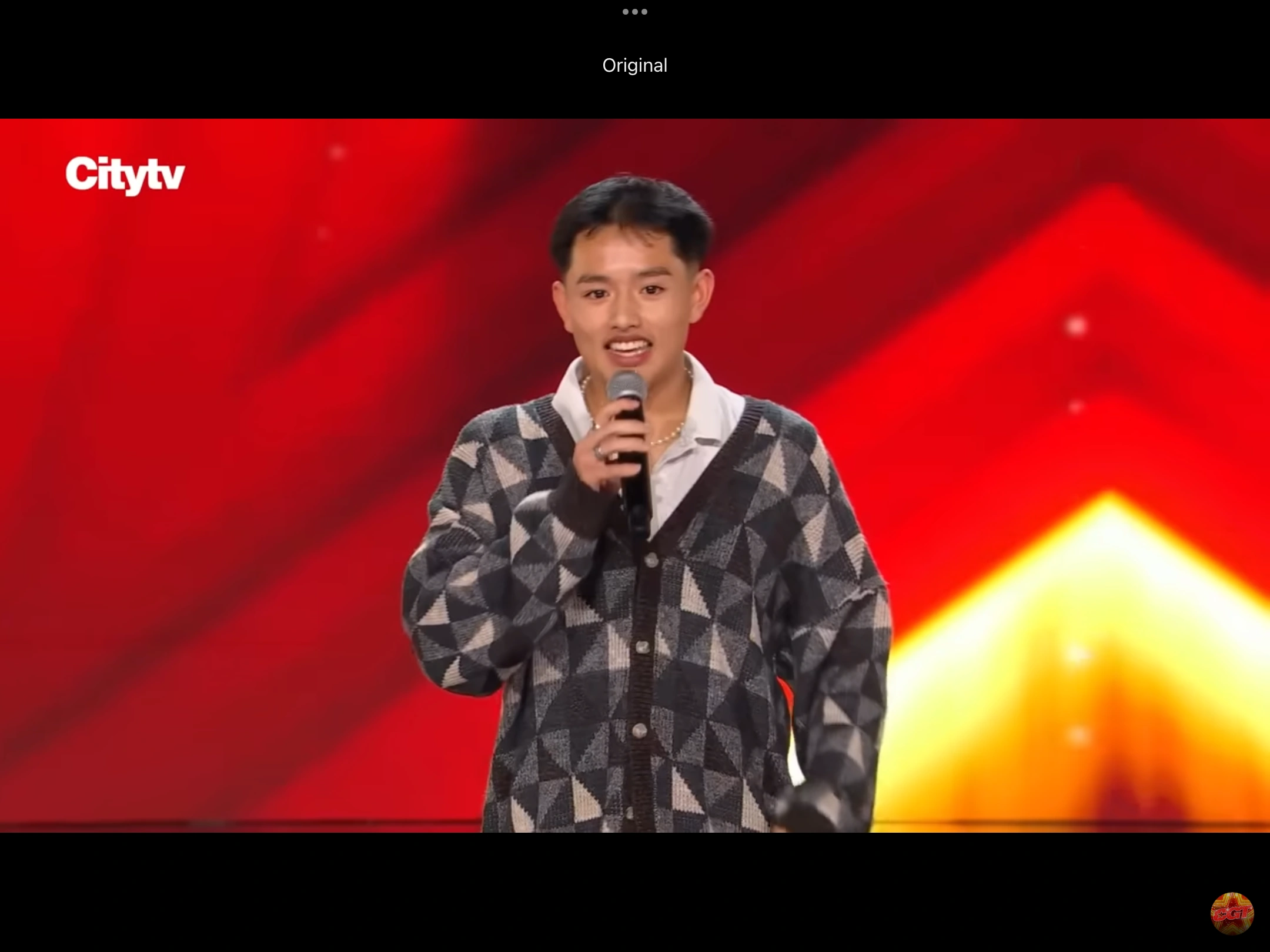
When 16-year-old Jordan Ho stepped onto the Canada’s Got Talent stage, there was an immediate, charming contrast between his boyish appearance and the gravity of the song he had chosen. He introduced himself with a shy grin and a quick, warm mention of his mom sitting in the audience — the woman who had supported every late-night practice and every tentative first step into performing. He explained, almost casually, that his earliest stages had been unconventional: impromptu shows and small performances at his mother’s nail shop. That image lodged itself in the room — a teenager singing between manicures and blow dries, learning to project his voice over the hum of dryers and the chatter of customers. It was an endearing, human detail that framed everything that followed and made his audition feel like a family story played out on a national stage.
Jordan chose to perform “This Is a Man’s World,” a song known for its soul-drenched weight and emotional intensity. For someone his age, the selection hinted at ambition and a willingness to take risks. From the moment he began, he surprised everyone: his voice didn’t sound merely promising for a teen — it carried the texture and presence of someone who had lived and listened a little more than his years might suggest. There was a smoky depth to his lower register and a controlled, resonant power in the higher lines. He resisted the temptation to oversing; instead, he honored the song’s emotional core, delivering each lyric with clarity and conviction.
Small artistic choices made the performance feel individual rather than an imitation. He softened a phrase to reveal vulnerability, then built into a climactic line with a breathy, deliberate push that made the lyric land. At one moment he paused on a word, letting it hang so the audience could feel its weight before moving on. Those pauses and emphases suggested a singer who thought about storytelling, not just hitting notes. His phrasing showed a sensitivity to dynamics — knowing when to pull back to draw listeners in and when to step forward so the emotion could swell. That kind of musical maturity is often honed in quiet, everyday places; the image of Jordan practicing in his mother’s shop suddenly felt like more than anecdote. It looked like the real source of his discipline.
As the song unfolded, the audience response shifted from polite attention to rapt focus. Heads tilted, phones were lowered, and a respectful hush fell over the auditorium. At one point the camera cut to Jordan’s mother: she had her hands clasped tightly, eyes glistening, and a proud smile that didn’t try to hide the tears at the corners. That close-up made the performance feel intimate. For Jordan, this was not only an audition; it was a tribute to someone who had believed in him from the beginning. The knowledge of that personal stake gave each line added meaning.
The judges’ faces changed as the performance progressed. Trish, who’d been watching with mild curiosity at first, gradually softened and covered her mouth, her eyes reflecting something like astonishment. Kardinal nodded subtly, his expression conveying sincere recognition of craft and heart. Their reactions weren’t only commentary on technical skill — though Jordan possessed that — but on his emotional authenticity. He sang with the honesty of someone who wasn’t posturing or performing a persona; he was delivering feeling.
Toward the end, Jordan stretched into a sustaining note that felt both effortless and hard-won. The sound filled the room and seemed to draw the audience together; you could feel the collective intake of breath, then the release into applause. The standing ovation that followed wasn’t perfunctory; it came from people moved by what they had heard. Even the judges rose, and for a moment it felt like critics and viewers alike were united in acknowledging the performance’s impact. In the time that followed, Kardinal would call Jordan the best singer he had heard all season — high praise that underscored the depth of the impression Jordan had made.
When the verdict came, the response was unanimous: four resounding “yes” votes that sent Jordan through to the next round. The affirmation felt like a public confirmation of what his mother had known all along: the afternoons in the nail shop, the practice between customers, and the steady encouragement had cultivated something real. Overcome with emotion, Jordan walked to the edge of the stage searching for his mother in the crowd. Their reunion was immediate and tender — a hug that seemed to compress years of support into a single embrace, her forehead resting against his as cheers washed over them. The cameras lingered on that tableau: a teenager and his parent sharing a profoundly human moment that had roots long before the lights.
Beyond the applause and the advancement, Jordan’s audition felt like a story about beginnings and the places that shape us. It reminded viewers that talent often grows in ordinary settings — a nail shop, a kitchen table, a school corridor — and that the people who nurture it are sometimes the quiet architects of later success. Jordan Ho’s performance stood out not because it was flashy but because it was honest: a young artist honoring his roots, demonstrating craft, and finally receiving a moment to be heard. For many watching, it was a moving reminder that sometimes the most striking performances come with the simplest backstories: grit, family support, and a voice ready to be noticed.