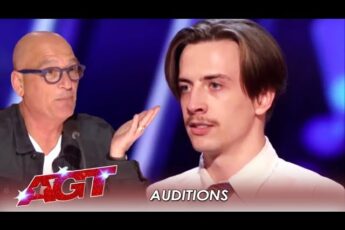
Josh Curnow, a 26-year-old singer-songwriter and guitarist from the windswept coast of Cornwall, walked onto the Britain’s Got Talent stage with more than just a guitar slung over his shoulder. He brought a story — one shaped by quiet determination and the kind of setbacks that can either bury a dream or fuel it. Before he sang, he told the audience and the judges about being diagnosed with dyslexia as a child and, worse, about a teacher who had advised him to give up on music and “do something sensible” instead. That admission landed with a weight that made the room attentive: this was not just another audition, it was a moment of reclamation.
The way Josh spoke about his past felt honest, without performative drama. He talked about the small humiliations and the heavy-handed practicality of adults who, perhaps trying to be helpful, had inadvertently belittled his passion. It’s an experience many people can relate to — the teacher who steers someone away from what they love in favor of perceived stability. But Josh also spoke about the other side of that story: late-night practice sessions, songs written in the margins of school notebooks, and the girlfriend he brought along who had been a steady presence through the ups and downs. Those details painted a picture of someone who, despite being doubted, quietly kept at it.
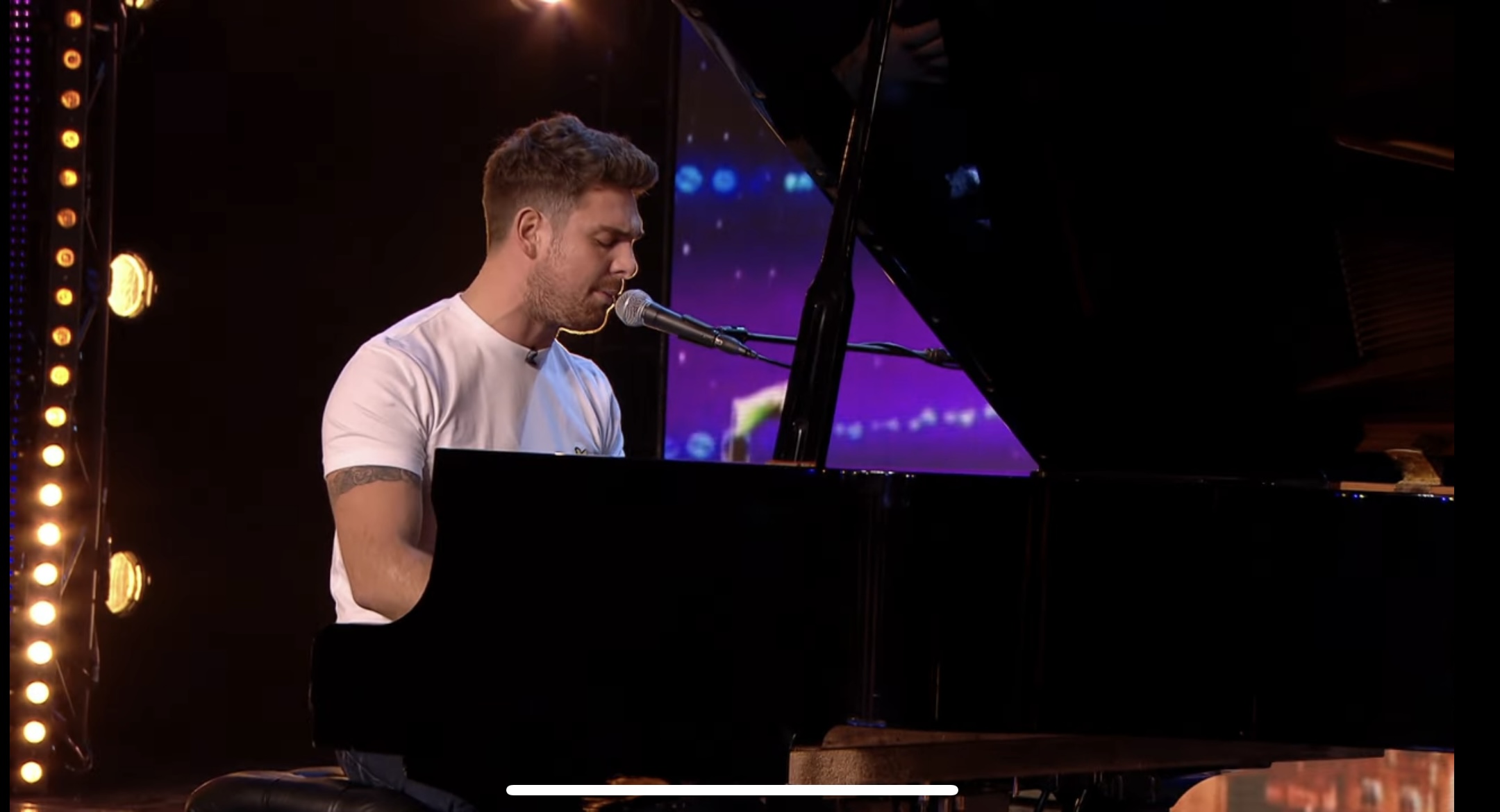
When he began to play, it became clear why he’d refused to let go. His guitar work was understated but precise, the kind that supports a lyric rather than showing off technique. His voice, a husky, slightly weathered tone that has become his signature, carried the vulnerable lines with a rawness that felt lived-in. He didn’t lean on theatrics; instead, he relied on the intimacy of the song. The lyrics themselves dealt with paranoia and the idea of one’s mind playing tricks — sentiments that could have been clinical or abstract in the wrong hands but here felt intensely personal. He sang about sleepless nights, the way worry coils in the chest, and the small rituals of trying to stay sane when your thoughts start to betray you.
There were moments that made the performance hit home: a breath held before a chorus, a slight rasp on a long note, a chord that lingered just a fraction longer to let the emotion resonate. Those micro-details created a sense of immediacy. You could tell the song had been lived rather than manufactured for a TV audience. In bringing original material rather than a cover, Josh was staking a claim to his identity as a songwriter — not just a contestant seeking validation, but an artist telling his own truth.
His relationship with his girlfriend added another human layer. She sat in the audience, watching him with visible pride, and that connection gave the performance an emotional anchor. When a performer has someone in the crowd who embodies their private life and private struggles, it changes how a song lands. You’re not just watching a singer perform; you’re witnessing someone lay down a piece of themselves and see how the people they love react. That tension — the desire to impress and the vulnerability of being seen — made Josh’s audition feel quietly epic.
The judges responded to that authenticity. Their comments weren’t merely about vocal range or technical skill; they acknowledged the narrative that threaded through his audition: the dyslexia, the discouraging teacher, the perseverance. It’s easy to underestimate how powerful those backstories are when they’re genuine. In Josh’s case, his history of being told he should give up on music made the performance more than entertainment; it became a rebuttal. By the time he finished, the applause felt like collective approval not only of the song but of his refusal to give in to external limits.
Beyond the show, Josh’s audition is emblematic of a larger lesson about resilience and creativity. Dyslexia can complicate traditional learning, but for many people it coexists with other gifts — a heightened sense of rhythm, an intuitive grasp of patterns, or a vivid imagination. Josh’s story suggests that a diagnosis or a discouraging comment need not define a life. Instead, they can become chapters in a narrative of persistence. He modeled how to take criticism without internalizing it, how to keep writing songs in spite of doubters, and how to bring the messy parts of life into art in a way that helps others feel less alone.
There’s also a modesty to his ambition. He spoke of wanting Britain’s Got Talent to be a stepping stone toward the “next level,” not as a demand for overnight fame but as a practical hope for more opportunities to write, gig, and grow. That pragmatic yearning made his dream feel attainable; it wasn’t built on fantasy, but on the desire to keep doing the work he loves under better conditions.
In the end, Josh’s audition was a quiet triumph. It wasn’t about shutting someone up with one flawless note; it was about continuing to show up, to create, and to let music be the thing that outlasts pessimism. For anyone who’s ever been told to stop chasing a dream because it seemed impractical or unlikely, his performance offered a simple, powerful counterpoint: keep going, keep writing, and let your art do the proving.