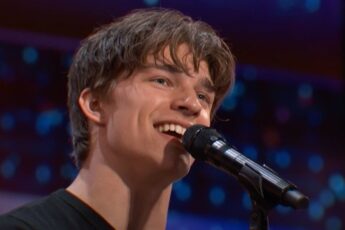

When 27-year-old Filipino singer Sephy Francisco walked onto The X Factor UK stage, there was an immediate hush — the kind of quiet that comes from an audience who’s seen dozens of hopefuls but still wants to give each one a fair chance. She looked like many contestants before her: simply dressed, hair neatly tied back, hands clasped in front of her as if to steady a fluttering heart. Her smile was polite but small; the nervous energy was visible in the way she shifted her weight from one foot to the other. When she told the judges she’d be singing “The Prayer,” the room nodded with the gentle expectation of something familiar — a big ballad, a soaring soprano, an emotional turn that might or might not land. What no one expected was the musical sleight of hand that would follow.
The opening chords began, soft and reverent, and Sephy launched into the Céline Dion part with a soprano that immediately marked her as anything but inexperienced. Her tone was smooth and controlled, the high notes ringing with a purity that stopped casual chatter across the auditorium. It wasn’t just volume; it was the way she shaped phrases, the little breath before a climactic note, the subtle vibrato that made long, sustained tones feel effortless. You could see people lean forward, drawn in by the certainty in her voice. For a moment, she fit the stereotype: a shy contestant, a big ballad, a comforting, familiar performance.
Then, like a magician revealing the trick, she did something none of them had seen coming. Mid-song, without fanfare, Sephy slid into the Andrea Bocelli lines — but not in a falsetto or a faltering attempt to hit lower notes. She dropped into a rich, operatic tenor that sounded like a different person entirely. The contrast was immediate and electric. Where moments before the soprano floated above the orchestra with crystalline clarity, the tenor filled the lower midrange with warmth and weight, resonant and authoritative. The first time she made the switch, there was a collective intake of breath so audible it seemed to ripple across the seats. Faces turned to each other as if to confirm they hadn’t misheard. The judges’ eyes widened; you could practically see their internal recalibration happening in real time.
What made the audition so arresting wasn’t only the technical ability to sing well in both registers — impressive on its own — but the seamlessness of her transitions. She moved between the parts with a calm assurance that erased any sense of trickery; it wasn’t a gimmick, it was musicianship. One moment she would be crystal and bright, navigating Celine’s high passages with crystalline precision; the next she’d anchor the melody with Bocelli’s robust tenor, giving the same lines a totally different emotional color. It was like watching someone perform a full duet by themselves, balancing two vocal personas with the kind of control most singers spend a lifetime trying to perfect.
The audience reaction built gradually, then burst. Applause started as polite warming up, then swelled into cheers that interrupted the song itself. By the time she reached the final phrase, people were on their feet, clapping and shouting in unison. When the last note faded, the thunder of the ovation felt instant and unanimous. The judges, who earlier had been poised to deliver the usual critiques of tone or stage presence, found themselves scrambling for superlatives. Simon Cowell, whose bluntness is TV legend, summed it up with a grin: “I’ve never judged a duo who is one person.” The other judges echoed the sentiment, calling her performance “incredible,” “a huge surprise,” and praising the technical mastery and emotional depth she’d shown. Four yeses followed, and Sephy walked away with a place in the next round — but the applause made it clear she’d won something bigger than that night’s approval.
For Sephy, the audition carried weight beyond the immediate triumph. Growing up in the Philippines, she’d idolized powerhouse vocalists like Beyoncé, Mariah Carey and Whitney Houston — singers known for their range, control and dramatic flair. Those influences were evident in the confidence of her delivery and the expressiveness she brought to each phrase. But her ability to inhabit both a soaring soprano and a resonant tenor hinted at a unique gift, one that felt rooted in both classical technique and contemporary showmanship. In interviews after the episode, people who knew her spoke of late-night practice sessions, vocal coaches, and a relentless curiosity about exploring the full potential of her instrument.
The moment cut through more than just the live audience. Clips of her audition spread quickly online, with viewers marveling at the “one-woman duet” and debating whether anyone else could pull off such a feat. Comments poured in from fans around the world, many expressing surprise, delight, and the simple joy of having their expectations upended. For those watching, Sephy’s performance became one of those rare TV moments where talent rewrites the script in front of your eyes: the shy contestant becomes a revelation, the expected ballad becomes a showcase of range and imagination, and the audience leaves with a story to retell.
In the end, Sephy didn’t just sing “The Prayer” — she made it a personal statement. She arrived as a hopeful contestant, and she left as proof that sometimes the most powerful performances come from artists willing to surprise themselves and everyone else. The duet she performed alone felt almost impossible until you saw it, and that lingering sense of wonder is what made the audition unforgettable.