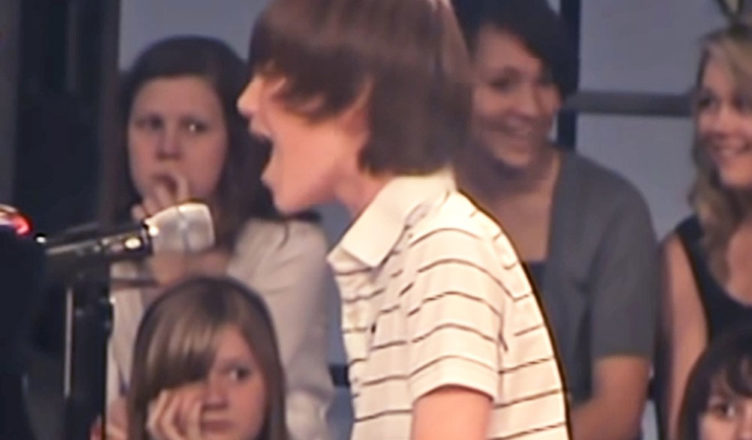
Do you recall Greyson Chance? Thanks to a piano arrangement of Lady Gaga’s “Paparazzi,” this 12-year-old Edmond, Oklahoma, kid went from being a bashful schoolboy to an online sensation in 2010. One day he was just another sixth-grader performing at a school talent show; a few weeks later, he was being watched by millions of people around the world. When the video was first posted in April, it had very few views—just friends, family, and a handful of curious strangers. But once it took off, it spread like wildfire. The performance, filmed in what looked like a typical school auditorium with folding chairs and a basic stage, quickly gained popularity. Greyson’s clip soon rocketed to more than 72 million views, and for a while, his heart-pounding version of “Paparazzi” was everywhere.
Greyson, who had been playing the piano since he was eight years old, felt every note of the song. You could see it in the way his shoulders moved with the rhythm and how he leaned into the keys, eyes sometimes closing as if he were alone in the room. His performance was outstanding not because of flashy staging or professional production, but because of his unadulterated passion and distinct approach. He slowed certain parts down, added his own emotional phrasing, and turned a pop hit into something deeply personal. For a 12-year-old, his sense of timing and control was astonishing.
Despite all that, the video barely made a ripple during its first few weeks online. It sat quietly on YouTube, gathering a few comments and modest attention, like countless other talent show recordings. That was before popular websites like Reddit and GossipBoy.ca picked it up on May 10, 2010. Almost overnight, everything changed. People began sharing the clip with captions like “You have to see this kid” and “Best ‘Paparazzi’ cover ever.” By the end of the day, it was all over social media and gossip sites. Celebrities such as Ashton Kutcher and Ryan Seacrest were tweeting about him, pushing the video to an even wider audience. Ellen DeGeneres joined in after Greyson’s older brother sent her team the link, and once she got involved, things went from big to enormous.
The very next day, Yahoo revealed that Greyson was going to appear on The Ellen Show. For a kid who had probably never even been to Los Angeles, this was the stuff of daydreams. Almost immediately, major publications like The Wall Street Journal and other news outlets began covering his rapid rise. Reporters were fascinated: how did a shy boy from Oklahoma suddenly become one of the biggest stories on the internet? The world watched as his star began to rise, and there was a sense that people were witnessing the birth of a new kind of fame—one powered less by traditional gatekeepers and more by clicks, shares, and online buzz.
Greyson’s first appearance on Ellen became a defining moment. Not only did he perform a flawless live rendition of “Paparazzi” in front of a studio audience and millions of TV viewers, but he also received an unexpected call, live on air, from Lady Gaga herself. Hearing her voice on the phone, praising his performance and encouraging him to follow his dreams, was surreal. Greyson looked overwhelmed and emotional, torn between nervous laughter and genuine awe. For everyone watching, it felt like a fairy-tale scene: the original artist recognizing and celebrating a young fan’s talent. That moment cemented his notoriety and turned him from a viral clip into a recognizable name.
But his story didn’t end with one TV performance. A few weeks later, Greyson returned to Ellen, this time not just as the “Paparazzi kid” but as an emerging artist in his own right. He sang his own original song, “Broken Hearts,” revealing that he wasn’t just a talented cover artist—he was a songwriter, too. The song showcased a different side of him: still emotional, but more introspective and personal. During that appearance, he also won a $10,000 award in Ellen’s “Wonderful Web of Wonderment” competition. The prize wasn’t only financial; it symbolized the belief that his talent was worth investing in.
Ellen took things even further by signing him to her own record label, a move that seemed to guarantee a bright future in the music industry. She also gifted him a brand-new Yamaha piano, the kind of instrument most young musicians only dream about. For Greyson, it must have felt like the universe was opening every door at once—support from a major TV personality, a record deal, national exposure, and the tools he needed to keep making music.
Still, with that rapid rise came questions. Was everything too wonderful to be true? Some doubters began to question whether Greyson’s viral moment had been orchestrated behind the scenes. The Christian Science Monitor even looked into whether the entire phenomenon was staged or manipulated as a publicity stunt. People wondered if he was just another product of media hype, carefully packaged and pushed to the public. As it turned out, those suspicions didn’t hold up. The investigation confirmed what many fans already believed: Greyson’s moment was genuine. The viral spark came from real talent, a chance upload, and the unpredictable nature of the internet.
In 2022, however, Greyson’s narrative took a more complicated and emotional turn. In a tearful interview with Rolling Stone, he opened up about the darker aspects of his rise to fame. Looking back with the clarity of adulthood, he described how overwhelming and, at times, painful that early success had been. Greyson labeled Ellen “opportunistic and manipulative,” claiming that after the buzz around his debut record faded, she pulled away and left him feeling abandoned. The glitz and excitement of TV appearances and red carpets gave way to pressure, confusion, and disillusionment. For a teenager trying to find his identity, that kind of emotional whiplash can leave deep scars.
Instead of walking away from music, though, Greyson channeled those experiences into his art. He poured his heart into his second album, *Palladium*, which he described as a very intimate look back at his turbulent life and career. The songs explored themes of trauma, resilience, identity, and reclaiming his own voice after years of feeling controlled by others. In a candid Instagram post, he explained that releasing the album felt like a weight being lifted off his shoulders. It was as if he were finally telling his own story on his own terms and closing a painful chapter of his past. That honesty resonated with fans who had grown up watching him and with new listeners drawn to his vulnerability.
Despite all the ups and downs of Greyson’s path—from viral stardom and TV fame to behind-the-scenes struggles and emotional reckonings—one thing has remained constant: his passion for music. It guided him when he was a nervous sixth-grader at a school piano, and it continues to guide him now as a grown artist redefining his identity. Regardless of where you stand on the controversies surrounding his early career, his story is undeniably one of perseverance, growth, and a constant quest for genuineness.
Today, Greyson continues to write, record, and perform, building a career that feels more grounded and authentic than ever. If you want to see where his journey leads next, you can follow him on his social media accounts and streaming platforms. There, beyond the headlines and viral clips, you’ll find what has always been at the center of his story: a musician still sitting down at the piano, ready to share another piece of his heart.