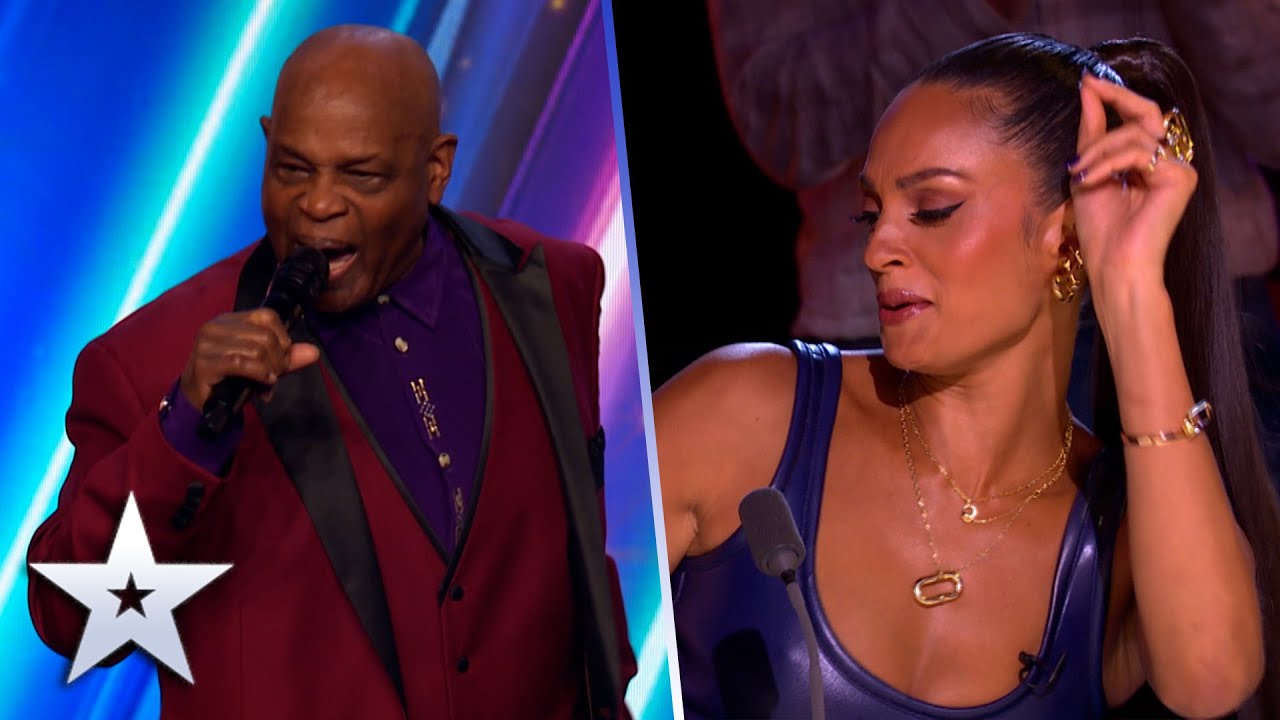
When Mel Day strolled onto the Britain’s Got Talent stage, he looked exactly like someone who’d come to enjoy the moment rather than dominate it: a relaxed smile, a calm gait, and the kind of easy confidence that comes with a life lived fully. At 77, he didn’t need theatrics or elaborate staging to make an impression — yet within seconds of the first gritty horn blast and his playful shout of “do the bop,” the whole auditorium had been pulled into his orbit. What began as what many assumed would be a sweet, low-key audition quickly flipped into one of those rare, joyous performances that leave both the live audience and viewers at home grinning ear to ear.
There was something delightfully surprising about the way Mel approached “Land of 1000 Dances.” Instead of trying to soften the song to fit people’s expectations of an older performer, he leaned into the track’s raw, celebratory energy. His voice carried a lived-in rasp that only added character, and when he hit those call-and-response lines, the crowd answered like they were remembering the tune from a long-ago night out. You could see the ripple effect: a few claps at first, then hands tapping, then entire rows joining in. By the second chorus the theatre had become less of a formal space and more of a community hall, united by a shared groove.
What made Mel’s turn especially memorable wasn’t just the music — it was the way he moved through it. He didn’t rely on complex choreography or flashy moves; instead, he communicated through small, magnetic gestures: a shimmy of the shoulders, a step forward into the spotlight, an invitation to clap that was more like a wink. Those tiny cues were all it took. People responded as if following the lead of a beloved uncle at a family party, and that intimacy translated immediately to the camera. Close-ups of smiling faces, people tapping feet, and judges leaning forward made the TV audience feel like they were part of the room.
The judges’ reactions captured the moment’s charm perfectly. What started as polite curiosity softened into unabashed delight. They laughed, they cheered, and they clapped along; at times they looked less like critics and more like fans letting go. That shift — from evaluation to celebration — is rare on talent shows, and it underlined something important about Mel’s performance: he wasn’t competing with anyone. He was offering joy, and the room accepted it. That exchange is the sort of unscripted magic that talent shows live for but seldom capture so purely.
There’s also a gentle lesson woven into what happened that day. Society often boxes older performers into expectations of quiet, reflective material, but Mel refused to be put into a corner. His energy was a reminder that musicality and stage presence don’t retire with youth. In fact, there was wisdom in his choice: he understood what would get people moving and how to read a room. Whether he was encouraging a clap-and-stomp or pushing the band into a brighter groove, he did it with the confidence of someone who has spent a lifetime around music and knows exactly which notes will make people stand up and dance.
Beyond the immediate spectacle, there were little human moments that made the audition feel authentic. After finishing a particularly rousing line, Mel flashed a boyish grin that belied his years. When a section of the crowd picked up a chant, he leaned in and seemed almost delighted by the communal response. Later, when the applause subsided, he thanked the audience with a soft humility that reminded viewers the performance was a shared gift, not a one-way display. Those fleeting interactions — the grin, the grateful nod, the wink with the drummer — made the clip stick in people’s minds long after the last beat faded.
The performance also played well online for the same reasons it worked live: it was easy to share, quick to enjoy, and emotionally satisfying. Short clips circulated showing people dancing in their living rooms, parents tagging children, and older viewers commenting that Mel had reminded them of the soundtracks of their youth. In an era of hyper-produced viral moments, Mel’s audition felt refreshingly sincere — a slice of unpretentious fun that made viewers want to pass it along.
When the dust settled, what remained was less about whether Mel had sung perfectly and more about the atmosphere he created. He had taken a classic soul number and made it feel immediate, communal, and exuberant. At a time when television can lean toward spectacle, his performance stood out for its heart. Mel didn’t need to try to be trendy or to prove anything; he simply brought a beloved song, a generous spirit, and a lifetime of rhythm. And for a few exuberant minutes, that was enough to get everyone dancing.