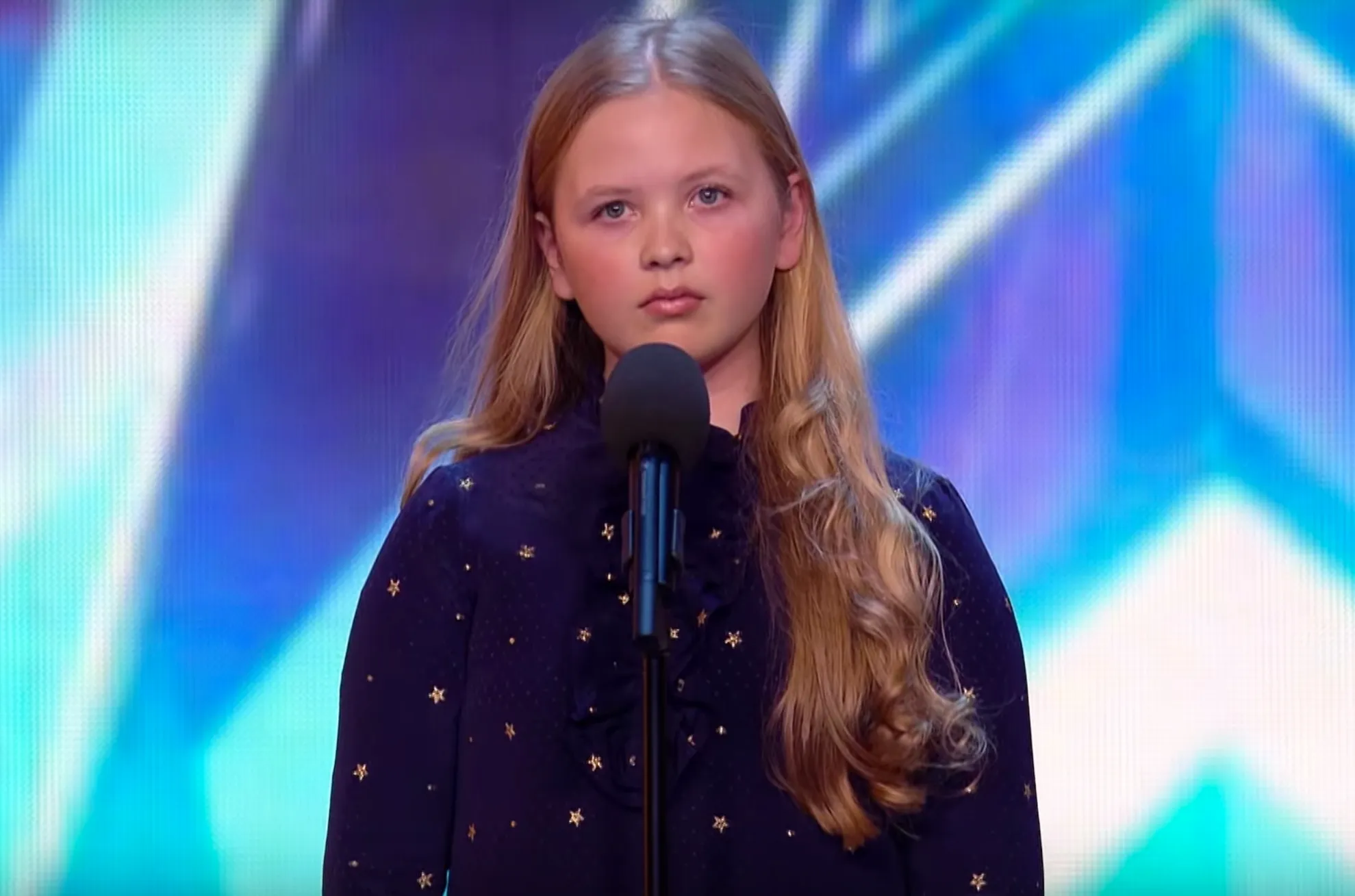
When Beau Dermott first stepped onto the Britain’s Got Talent stage, she looked like someone who had swallowed a problem she wasn’t entirely sure how to solve. Petite and wide-eyed, she clutched the microphone with the kind of tentative hope you see in people who have practiced a thousand times alone in their bedroom and are now daring to share their inner world with strangers. Choosing “Defying Gravity” from Wicked was an audacious move — the song is a theatrical Everest, a piece that asks for vocal maturity, dramatic understanding, and the kind of stamina most singers don’t develop until adulthood. For a moment, the theatre felt like a held breath, everyone bracing to see whether the fragile-looking girl before them could scale that impossible peak.
Then Beau opened her mouth, and the air changed. It wasn’t simply that she hit the notes; it was how she inhabited them. The opening phrases floated with a bell-like purity, then gathered weight as she pushed into the song’s more demanding passages. Her voice moved with a kind of natural authority that made the lyrics feel lived-in rather than performed. When she reached the song’s big climactic moments, the sound that filled the auditorium was astonishingly full-bodied and controlled, with a resonance that seemed to come from somewhere much larger than her slight frame. Each sustained phrase was not only accurate but emotionally resonant — you could hear the defiance and yearning threaded through every vowel.
What made the performance feel almost magical was the contrast between Beau’s physical presence and the size of the sound she produced. It was as if the music itself had swelled to match the drama of the piece, transporting listeners from a TV studio to the middle of a West End theatre. The audience’s reaction shifted from polite attentiveness to open, disbelieving wonder. Shoulders relaxed, mouths opened, and then applause broke — tentative at first, then mounting into full-throated ovation. You could see people craning to their feet, involuntary, as if they too had been swept upward by an invisible lift.
The judges were similarly undone. Amanda Holden, always quick to respond emotionally to a moving performance, found herself more than impressed; she found the need to act. Words were insufficient for what had just unfolded, so in a flash of theatrical solidarity she reached for the Golden Buzzer. The resulting eruption of gold confetti felt less like a production flourish and more like a coronation. As the glitter rained down, Beau stood in the middle of it all, a small figure suddenly haloed, the physical representation of her song’s message: lift off, ascend, be seen.
But it wasn’t just spectacle. There were technical aspects of Beau’s singing that made what happened believable. She demonstrated impeccable breath control during long phrases, a precise sense of intonation, and a surprisingly mature approach to dynamics — she could sink into a softer, intimate sound then explode into full-throated power without losing pitch or phrasing. There were moments when she softened a line so delicately that you leaned in, then immediately when the phrase demanded it she would unfurl a chest voice that carried through the room. That ability to switch registers seamlessly is rare in a singer so young, and it conveyed both the technical skill and the interpretive instincts of someone much more experienced.
Emotion threaded every contour of the performance. The song’s narrative of breaking free and declaring independence resonated coming from a young performer who may still be negotiating the confines of adolescence and expectation. In Beau’s voice you could hear not just practiced technique but an earnest belief in what she was singing. That belief translated into something contagious. By the time the final high note rang and then gently faded, the atmosphere in the theatre had shifted permanently; people who had come to judge found themselves in the uncomfortable position of being charmed and humbled.
Backstage afterward, you could imagine the mix of stunned joy and relieved exhaustion that often follows a once-in-a-lifetime moment. For Beau, the Golden Buzzer was more than a ticket to the next round; it was an emphatic message that someone had seen her fully and decided she deserved more than a passing nod. For viewers at home, the clip of a small, nervous girl turning into a commanding presence likely lodged quickly into viral territory — the kind of story that people love to share: raw talent meeting the right moment.
What made the evening feel less like a one-off TV moment and more like the start of something was its sincerity. There was no contrivance in Beau’s performance, no calculated gimmick — only a young artist stepping up to a monumental song and, for one radiant stretch of time, making it her own. The Golden Buzzer was the show’s way of acknowledging that transformation: yes, you defied gravity; yes, you lifted an entire room. As confetti settled and applause echoed, it was clear the moment would linger — a reminder that sometimes the smallest voices can project the loudest truths, and that courage paired with talent can truly change the air around you.