
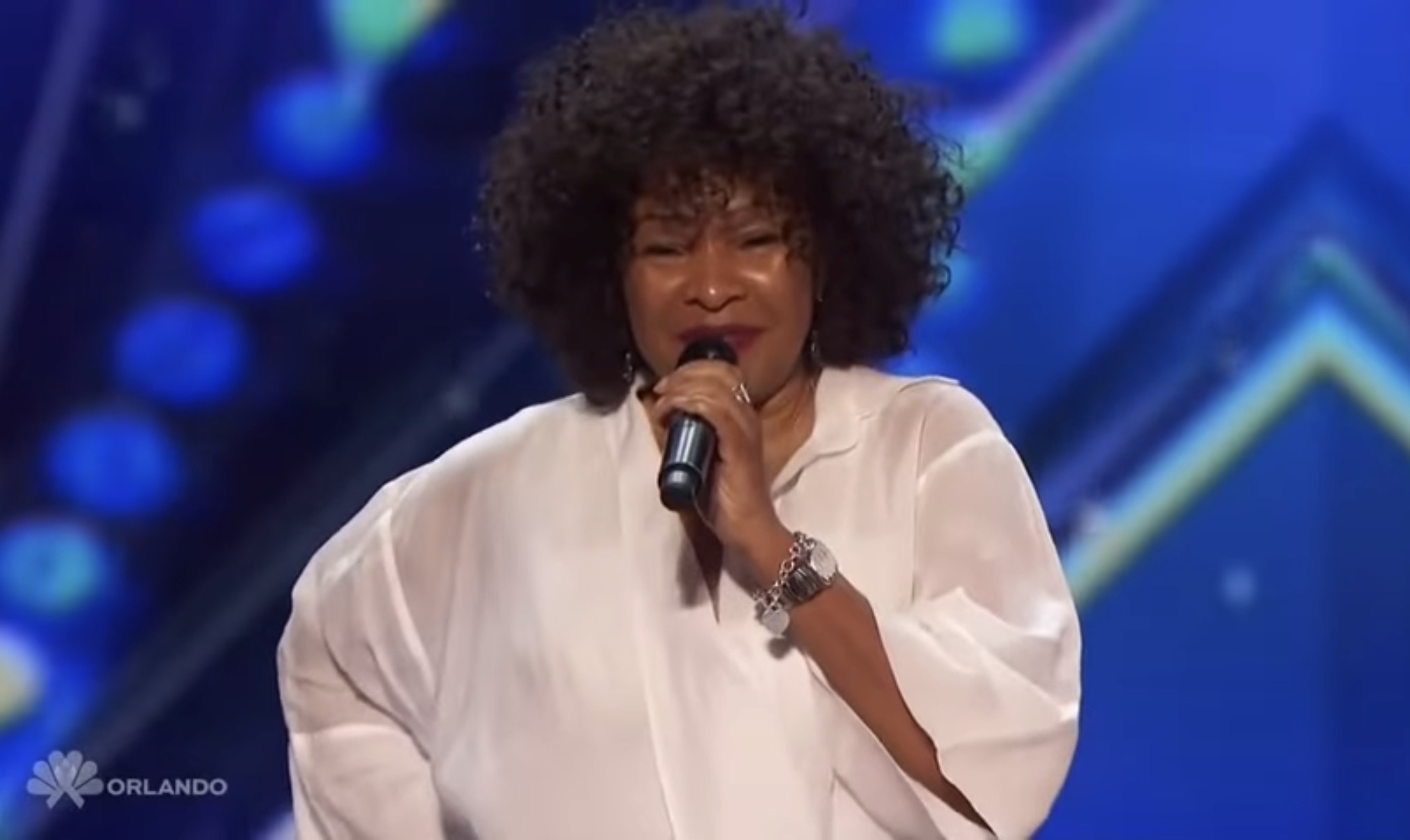
Ronee Martin, a 62-year-old legal assistant from Virginia, walked onto the America’s Got Talent stage carrying more than a microphone—she carried decades of small victories, disappointments, and a stubborn belief that her moment might still come. For years she’d chased the elusive promise of a record deal, singing in church halls, at neighborhood bars, and for friends and family whenever there was a reason to celebrate. Those weren’t big stages, but they were where she honed her craft, learned how to read a room, and developed a resilience that only comes from showing up again and again. That backstory made her clearly determined but also a little raw; you could see how much this opportunity meant to her.
Her audition began with a choice that, on paper, made sense: “I Can’t Make You Love Me,” a slow, vulnerable ballad that asks for intimacy and subtlety. But the opening notes didn’t land the way everyone hoped. The performance felt flat, the phrasing tentative rather than confident, and the connection that the song demands didn’t quite arrive. For a few tense seconds, the judges exchanged looks and the audience shifted uncomfortably. It was one of those auditions where you could sense the dream wobbling on its axis—so close to crumbling.
Simon Cowell, who has made a career of cutting through the clutter to get to the heart of a performance, didn’t hesitate. He stopped the music. There was a silence that felt heavier than applause, and Simon’s words were blunt and direct: the song choice wasn’t working for her. He asked if she had anything else prepared. That moment—a musical pause punctuated by an almost clinical assessment—would have flattened most people. The pressure was immense: cameras, millions of viewers, the expectation that this could be the last chance to turn the tide. You could see how some auditionees might crumble and walk off stage, but Ronee did something different. She inhaled, steadied herself, and answered with calm confidence that she did have another song.
She chose “(You Make Me Feel Like) A Natural Woman,” a soul classic that requires not just technical skill but emotional authenticity and guts. From the first phrase, the room changed. The earlier fragility gave way to a surge of power that felt rooted in experience rather than mere bravado. Her tone opened into something rich and resonant, a voice that had lived through years of living and singing, and now had a story to tell. The breath control, the subtle inflections, the way she held certain notes just a fraction longer—each choice revealed a seasoned singer who—when matched with the right material—could capture an audience.
The contrast between the two performances made the turnaround even more striking. Earlier, when she sang the ballad, you could tell she was trying to fit herself into a mold that didn’t quite match her strengths. With “Natural Woman,” she finally seemed to inhabit her own sound. Her phrasing became more assured; she warmed up into the melody and added soulful flourishes that felt earned. At key moments she let the music breathe, letting the words carry the emotion rather than forcing them. The band responded, the room filled with a sense of uplift, and the judges’ expressions shifted from skepticism to surprise, then admiration.
Mel B, one of the judges, admitted later that she was ready to hit “no” after the first song. That confession made her subsequent reaction even more powerful; watching her sit back, eyes wide, and then quietly nod as the performance unfolded was a reminder that great auditions can flip expectations on their head. Simon himself praised not only Ronee’s voice but her spirit—the grit it takes to keep trying despite setbacks. He emphasized that the show exists to give talented people chances that might otherwise pass them by, and in that sense Ronee’s moment felt emblematic of what the series can do: redemptive, surprising, and human.
When the votes came in, they were unanimous. Four enthusiastic “Yes”es validated that this was more than a one-off emotional moment; it was a recognition of skill, presence, and heart. The audience cheered, some wiping tears, others clapping like they’d just witnessed something rare. For Ronee, it wasn’t simply about advancing in a competition. It was, in many ways, a personal vindication—a public acknowledgment that years of perseverance could culminate in a single, transformative performance.
Beyond the immediate drama, Ronee’s audition is a reminder about the importance of song choice, timing, and authenticity. The right material can unlock a performer in ways that pure technique can’t. It also underscores a larger truth about age and opportunity: talent doesn’t expire with a birthday. Ronee’s journey—her late-in-life resurgence—speaks to anyone who’s ever doubted the clock. She showed that experience can sharpen artistry, that persistence can outlast disappointment, and that courage sometimes looks like choosing a different song when the first one doesn’t fit.
In the end, what made this audition memorable wasn’t just the shock of Simon stopping the music; it was the human story behind the moment. It was the sight of a woman who’d been told “not yet” for years, stepping back into the light and finding a way to let her true voice be heard. That’s the kind of moment that lingers—not because of controversy or spectacle, but because it feels real, earned, and quietly triumphant.