
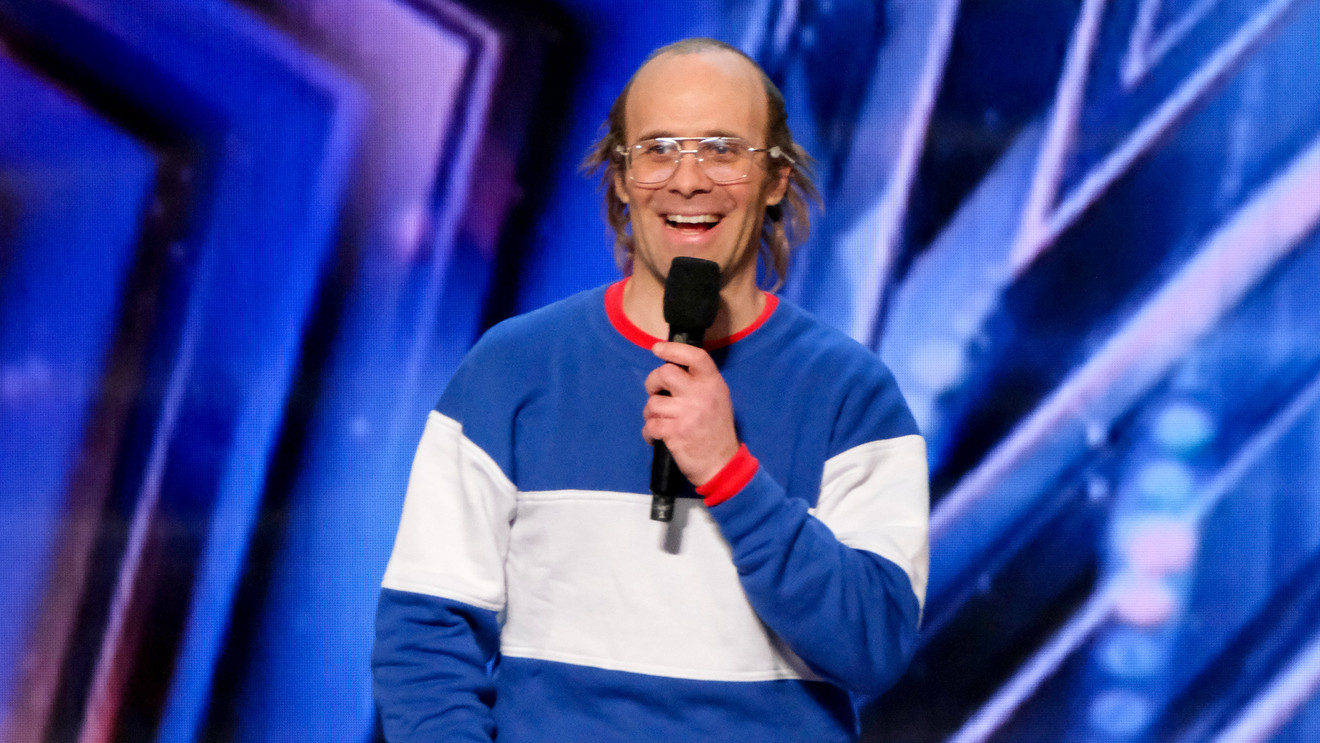
When Keith Apicary stepped onto the stage that night, the crowd greeted him with a curious mix of amusement and genuine anticipation. Known to many as a lovable nerdy persona with a knack for turning awkwardness into charm, Keith carried himself with a playful confidence that suggested he was about to do something unexpected. The lights warmed, the opening beat dropped, and for a moment you could see the audience lean in, waiting to see whether this would be another comic bit or something that would actually make people stand up and cheer.
Almost immediately, Keith dispelled any notion that this would be a simple gag. He opened with a series of crisp, tightly controlled moves — quick footwork, isolated shoulder pops, and an old-school robot glide that evoked a respectful nod to classic dance hall styles. Those first bars were a clever misdirection: they were playful enough to fit his persona, but precise enough to reveal the hours of practice underneath. As the music built, so did his confidence, and you could tell he was enjoying the audience’s shift from smirks to genuine admiration.
Then came a sequence that made people forget to breathe. Keith launched into a set of maneuvers that blended elements of popping, locking, and contemporary street dance, all threaded together with theatrical flair. He used the entire stage, slicing through space with sudden spins and low, sweeping footwork that kept the crowd’s eyes glued to his feet. At one point he executed a flawless windmill-style sweep, legs fluent and textbook, earning a chorus of gasps and applause from those who recognized the difficulty. It wasn’t just about flashy tricks; he layered in little theatrical flourishes—an exaggerated wink, a mock-triumphant chest bump, a sudden freeze where he held his body so perfectly that the cameras lingered on his expression.
The performance had an almost cinematic arc. Keith built tension by alternating between explosive bursts and moments of near stillness. After a rapid-fire sequence of foot taps and syncopated hits, he would abruptly drop into a slow, balletic turn that felt almost tender in contrast. That push-and-pull kept the audience emotionally invested; you could see people on the edge of their seats, waving phones up, trying to capture the precise instant when something brilliant would happen. Parents who had come expecting a humorous interlude found themselves caught up in the rhythm, and teenagers who initially rolled their eyes were now chanting and cheering.
Of course, part of the spectacle was Keith’s willingness to toy with danger—playfully, not recklessly—by incorporating stage theatrics that flirted with the edge. Midway through his routine, he used a ramped portion of the set to launch into a dramatic vault, a move that demanded perfect timing and awareness of one’s surroundings. For a heartbeat it looked like the move would end in a spectacular misstep. He clipped the lip of the ramp, and yes, there was a split-second where gravity and momentum conspired to send him spinning toward the stage’s edge. The collective intake of breath was audible; someone gasped, “Did he just fall off the stage?!” It was the sort of moment that makes live events feel alive — raw, unpredictable, and thrilling.
But Keith recovered with a combination of agility and showmanship that turned potential disaster into a highlight reel moment. Instead of a tumble, he converted the momentum into a deliberate floor-slide, using the stage’s angle to spring back upright in a move that looked planned in retrospect. The audience erupted, half in relief and half in admiration for the improvisational skill it revealed. That recovery—an instinctual mix of dance ability and quick thinking—shifted the energy in the venue from anxious to electric. People were cheering louder, more animated, as if they’d just witnessed something uniquely human: the graceful salvage of a near-mishap.
Beyond the technical impressiveness, there was something oddly endearing about Keith’s performance. He didn’t hide his grin after big moves; he acknowledged the crowd with exaggerated bows and theatrical gestures. When a kid in the front row whooped, Keith pointed and gave a playful nod, building a tiny, memorable connection that made the moment feel intimate despite the size of the venue. Small details—sweat darkening his shirt, a loose shoelace he pretended not to notice, the way he muttered “let’s go” under his breath before a tricky sequence—made the whole thing feel lived-in and real rather than overly produced.
By the time the final number hit, Keith had cranked the energy to a fever pitch. He stitched together everything he had shown—tight isolations, acrobatic flourishes, theatrical pauses—into a climactic run that made the crowd rise to their feet. The last pose lingered: Keith, arms outstretched, chest heaving, a wide grin splitting his face. Applause thundered, people shouted his name, and the viral clips began to spread as phones recorded the aftermath. In the posts that followed online, fans replayed the fall-that-wasn’t-a-fall, the improvised save, and the sheer joy of watching someone take a risk and come out spectacularly on the other side.
That night, Keith Apicary did more than surprise America—he reminded everyone why live performance still matters. In an era of perfectly edited content, his routine stood out for its authenticity, its blend of skill and personality, and that delicious moment when the audience collectively held its breath and then let loose in cheering. Whether you came for the laughs or stayed for the dancing, you left talking about the move that nearly sent him offstage and the way he turned a stumble into an unforgettable finale.