
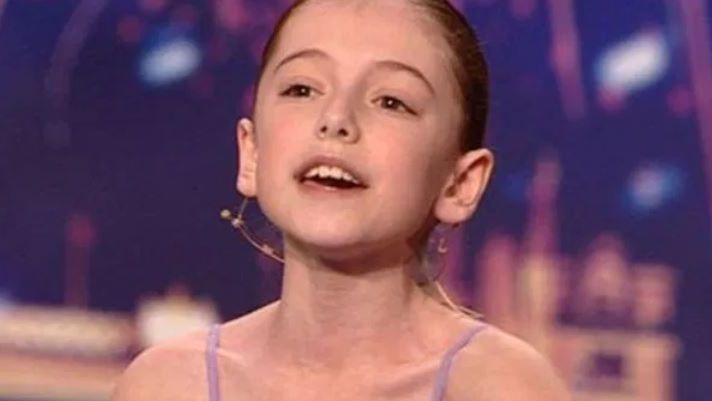
When Hollie Steel walked onto the Britain’s Got Talent stage at just ten years old, the scene felt almost quintessentially wholesome. She wore a delicate tutu that caught the stage lights with each small movement, her hair tied neatly back, and she carried herself with the kind of shy, rehearsed composure you see in community recitals. The audience murmured politely; a few cooed at the sight of such a young performer. On one side of the auditorium, her family sat clasping hands and exchanging nervous smiles, the kind that betray both hope and anxiety. For many in the room, it seemed safe to assume this would be another charming, childlike moment — a simple dance or a brief, pleasant song that would earn warm applause before the next act took the stage.
Then Hollie opened her mouth. From the very first phrase of “I Could Have Danced All Night,” the atmosphere shifted as if someone had turned the lights down and tuned the world to a single, extraordinary frequency. What began as an unassuming entrance became a revelation. The voice that poured out was not just pretty or well-practiced; it carried an operatic clarity and a range that defied her years. The auditorium, which had been filled with polite whispers and rustling programs, fell into a hush. People who had been ready to applaud a cute performance instead found themselves leaning forward, eyes wide, as the sound filled the room with professional-level polish and emotional depth.
Hollie’s control was remarkable. She navigated the song’s delicate phrasing and dramatic swells with a steady hand, placing each note precisely and letting the melody bloom naturally rather than forcing it. There were moments when she softened to a near-whisper, drawing the audience in, and others where she unfurled sustained notes that resonated richly without sounding strained. It wasn’t just about volume or technical skill; it was about musical intelligence. For a child who might have been assumed to mimic adult singers without understanding, Hollie demonstrated an innate sense of interpretation — the ability to make the lyrics mean something in the moment.
The judges’ faces tracked that transformation in real time. Even Simon Cowell, whose reputation for bluntness and skepticism often precedes him, looked visibly taken aback. He had been among those who admitted initial reservations about Hollie’s outfit and song choice, commenting that the tutu and the classical selection seemed out of step with the show’s typical pop-leaning acts. Yet as the performance unfolded, his expression softened into something like admiration. The other judges mirrored that journey from surprise to sincere praise; they sat straighter, their usual patter replaced by genuine attention. When the final note hung in the air and the silence broke, the response was immediate and overwhelming — a standing ovation that felt less like a courtesy and more like an instinctive, collective recognition that something rare had just occurred.
Outside the auditorium, the reaction snowballed. Clips of Hollie’s audition spread across television reprises and social media feeds, each replay amplifying the disbelief and delight. Comment sections filled with astonished messages: people marveled that such a small figure in a tutu could emit a voice with the technical strength and emotive maturity of a seasoned performer. Friends and neighbors from her small town sent messages of pride, recounting anecdotes of a child who loved to sing around the house, who would quietly practice arias between schoolwork and play. Those snippets of local color made the televised moment feel grounded, a reminder that extraordinary talent often grows in ordinary places.
Part of what made Hollie’s audition so shareable was the contrast — the unexpected pairing of a youthful, almost fragile stage presence with an authoritative, commanding voice. That incongruity created a narrative people wanted to tell: don’t be fooled by appearances; greatness can arrive in the most unlikely of packages. Her success on the spot wasn’t just a personal triumph; it became a story about discovery and the joy of being surprised by human potential. The judges’ unanimous praise underscored that point. They were not merely indulging a cute performance; they were acknowledging a technical and interpretive ability far beyond what one normally expects from a child performer.
As she advanced to the next round, the momentum only increased. Producers and music professionals began to take notice, and the media interest turned from a novelty angle into a more serious conversation about training, potential, and the responsibilities of guiding an exceptionally young talent through a public career. For many viewers, though, the most lasting memory remained that simple audition: a quiet child in a tutu standing alone on a big stage and producing a sound that made the whole room stop and listen. Whether she would go on to win the competition became secondary to the fact that, in that fleeting moment, Hollie Steel had rewired expectations and reminded everyone watching of an enduring truth — that talent can both surprise and uplift, and that sometimes the most memorable performances are the ones that come from the least expected places.