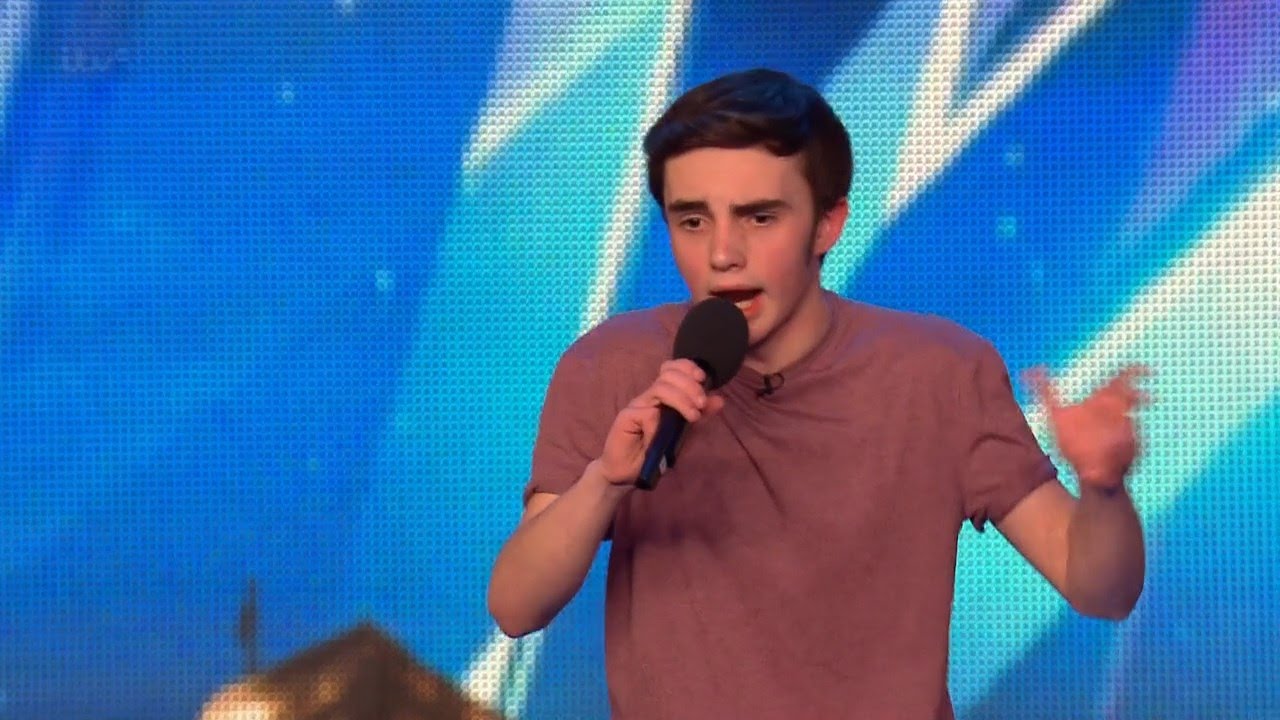
Fifteen-year-old Daniel Chettoe stepped onto the Britain’s Got Talent stage with a mixture of nerves and quiet concentration. Dressed in casual clothes that emphasized his youth rather than any showmanship, he looked like any ordinary teen: slightly awkward shoulders, a hopeful smile, and a grip on the microphone that suggested he knew the stakes but also wanted to stay grounded. The lights warmed the auditorium in a familiar glow, and for a moment the murmur of the audience felt larger than the performer. Given his age and appearance, most people in the room — the audience, the crew, even the judges — probably expected a standard teenage performance: a pop song, a trendy arrangement, maybe some vocal runs that fit the social media era. No one expected what came next.
He chose “Cry Me a River,” a song that carries the weight of mid-20th-century jazz and torch-singer sophistication. It’s a number associated with smoky lounges and mature heartbreak, not the world of teenagers. The first notes cut through the theater like a soft-but-precise knife. Where a young voice might have sounded tentative, Daniel’s tone was immediately full and resonant, as if someone had turned on a vintage radio and a seasoned crooner came to life. His baritone landed with a richness that felt older than his years; it had depth, texture, and that slight grain that gives jazz singers their emotional credibility.
As he moved through the verses, his phrasing made it clear he understood the song’s emotional architecture. He didn’t simply belt the words; he shaped them, timing each syllable so that the lines breathed and lingered. The subtle drops in volume, the intentional pauses between phrases, the little inflections he used to emphasize a lyric — all of that spoke of an instinctive grasp of classic vocal technique. For a moment the audience didn’t know whether to clap or simply listen, and the judges who were accustomed to flashy performances and dramatic revelations looked genuinely puzzled, then transfixed.
You could see the change in the room. The chatter faded, breaths synchronized, and eyes leaned forward. A camera caught a judge wiping a hand across his face as if to make sure what he’d heard was real. Another judge’s jaw dropped in a small, involuntary motion of disbelief. Even the crew in the wings seemed to forget their cues, mesmerized by the unexpected timbre. It was the kind of reaction that doesn’t come from technical showmanship alone but from something rarer: authenticity. Daniel’s voice delivered both the glint of stagecraft and the intimacy of someone singing directly to one person in a dim club. The combination was disarming.
There were small details that made the performance feel even more poignant. When he reached the chorus, he softened his consonants just slightly, letting the vowels bloom in the auditorium. At the song’s emotional peak, he didn’t reach for dramatic high notes; instead, he dug deeper into the lower register, letting the music resonate in the chest of anyone listening. That choice made the final lines land with quiet authority, the sort of authority that doesn’t shout but insists you pay attention. You could almost imagine smoke curling above a glass of whiskey as an older singer tells a story of regret — except this narrator was a boy who’d barely finished school.
When the last note hung in the air and dissolved, the silence was the kind that precedes a clap — not polite applause but full, shocked appreciation. Then the room erupted. The audience leapt to their feet, the kind of standing ovation reserved for moments that feel historic in miniature. Judges stood, cameras swiveled, and even the crew allowed themselves grins and whispers. The clip that captured this felt almost too short, cutting away just as the ovation began, but the glimpse was enough: stunned expressions, hands over mouths, and an outpouring of approval that seemed to surprise Daniel himself. His eyes widened, a shy smile breaking through, and for a second you could see the sheer wonder of someone who had just revealed a side of themselves that even they might not have expected.
Daniel Chettoe’s performance lingered in the mind because it highlighted a powerful contrast — not just between appearance and voice, but between expectation and reality. In a world that often boxes people into categories, his singing was a reminder that talent doesn’t always arrive packaged in predictable ways. It came from an unlikely source, delivered with the confidence of experience and the freshness of youth. The moment reaffirmed something viewers always hope a show like Britain’s Got Talent will uncover: that magic can appear where you least expect it, and when it does, it leaves a mark.
As people replayed the clip and shared it online, the prevailing fascination wasn’t only with the technical skill but with the emotional dissonance of a voice that seemed to belong to another era. Daniel’s performance wasn’t a gimmick; it was a full-bodied musical statement — a teenager channeling the depth and style of classic crooners and making it his own. For everyone who watched, it was a brief, thrilling demonstration that the most memorable performances are the ones that shift our assumptions and give us something we didn’t know we needed.